Jersey City and the surrounding Hudson County area
Mold Removal in Jersey City Depends on Which Hill You Are On
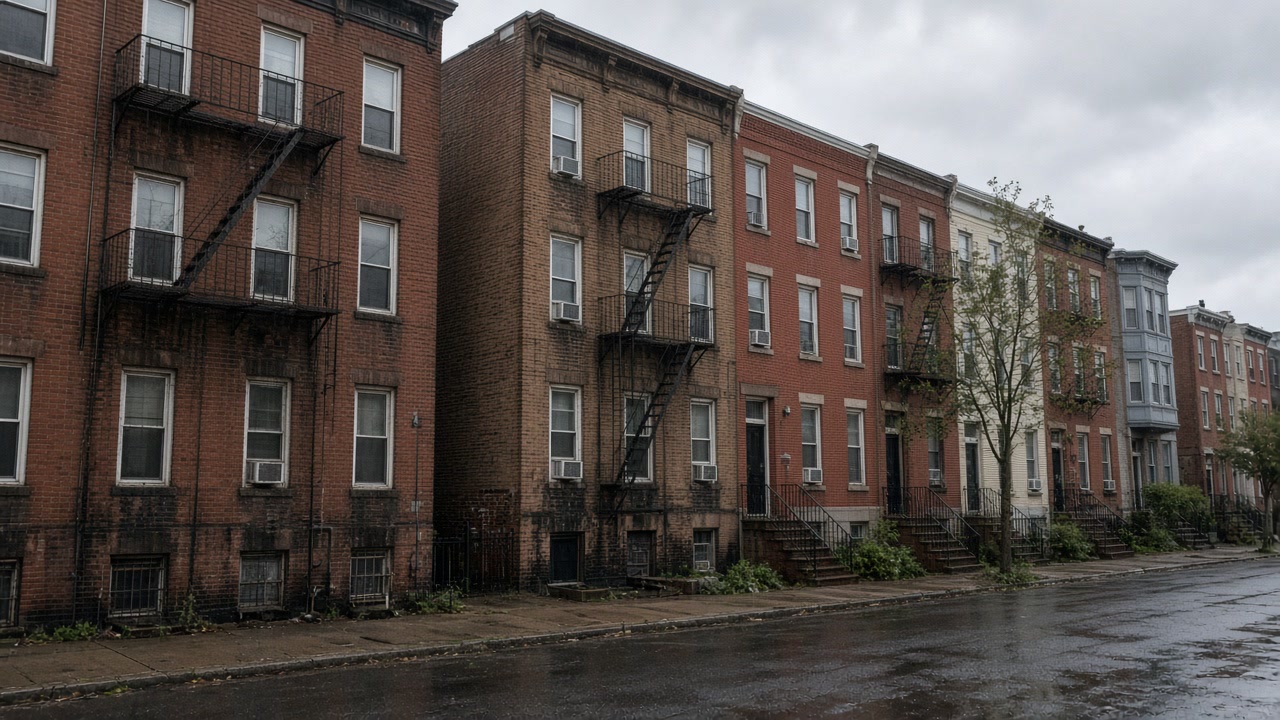
Tell us what you can see and you will get a straight answer on which of Jersey City's three water problems you have, what stopping it involves, and whether it needs a contractor at all. The answer moves with your address: the ground falls from about 157 feet at Pershing Field in the Heights to about 6 feet at Exchange Place two and a half miles away, and water arriving sideways through an old foundation is a different job, at a different cost, from water pushed up a floor drain out of a combined sewer. Working out which one you have is most of the value in the job, so the company that writes the finding is never the company that sells you the removal.
Request a Quote
Tell us the street or the neighborhood, what you can see or smell, and whether the water came up through the floor or in through a wall. In this city those two answers point at different trades, different costs and often a different person who should be paying.
Would you rather talk it through? Call (315) 640-3590, answered 24/7.
$100 off your first job
Credited by us on your first booked job.
- One credit per customer per property, on your first booked job.
- Valid through December 31, 2026.
Mention this offer when you book. Full terms.
Which of the three you need is decided by the water, not the stain
Finding it, taking it out and drying the building are three pieces of work, and rolling them into one hand is how a small problem gets quoted as a large one. An inspection tells you what is there, what is feeding it and how far it runs. Removal takes out what cannot be saved and contains the rest. Drying is the right job when the material is still sound and you are inside the window the EPA puts at 24 to 48 hours, after which wet material starts growing rather than drying. Which of the three you need is a question about the water, not about the stain.
Mold Inspection and Testing
Find out what is actually growing, what water is feeding it and how far it runs, in a written report from a company that is not quoting for the removal.
Start here if something is growing or something smells, and nobody independent has written down what it is or where the water is coming from.
About Mold Inspection →Mold Remediation and Removal
Get the mold and the material holding it out of the building, with the water route closed first and the scope set by where the water came from rather than by the size of the stain.
Start here if the cause is known and the water is dealt with, and now the wet material has to come out of the building.
About Mold Removal →Water Damage Drying
Get the water out and the structure dry fast enough that mold never starts, and find out on day one whether what came in can lawfully be dried in place at all.
Start here if water got in recently, something is still wet, and nothing has started growing yet.
About Water Damage Drying →Testing, removal, or only getting it dry?
Tell us the street and what you are looking at. Which of the three it is usually follows from where you are standing, and sometimes the answer is that it is none of them.
How a request turns into an answer
Three steps. The first one is a conversation, not a visit, and it often ends the matter.
Tell us the address and what you are looking at
Send the form with the property address and its ZIP code, or call and describe it out loud. Before anyone comes out we work out which part of the city you are in and whether you are describing a drying job, a removal job, or a dehumidifier.
An assessment from a company that is not bidding the removal
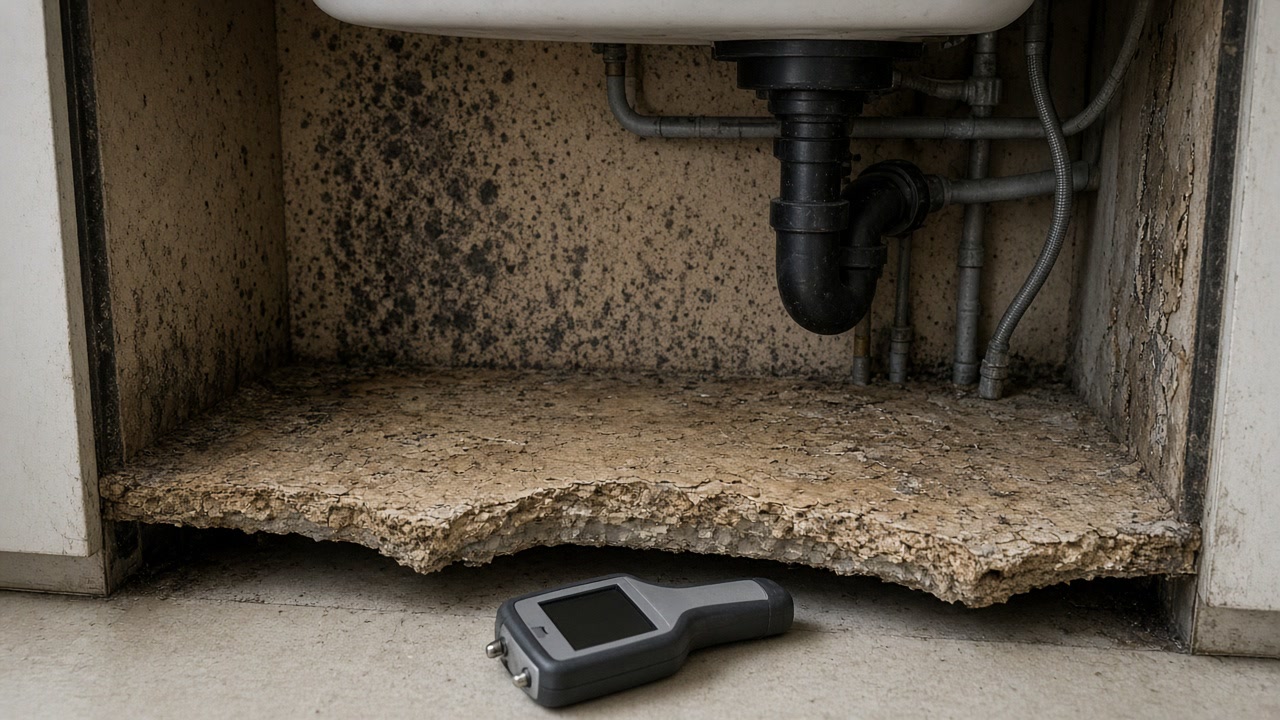
A room by room walkthrough, moisture readings, and the finding written down. The New Jersey Department of Health says that report should carry the areas inspected, the cause of the growth, how to take care of the problem and any sampling results, and that is the shape we ask for.
The work is priced against that document
A separate licensed and insured contractor quotes the scope the report describes, so the party naming the work is not the party who decided how much of it there is. You are under no obligation to accept it, and you keep the report either way.
What makes this a local problem
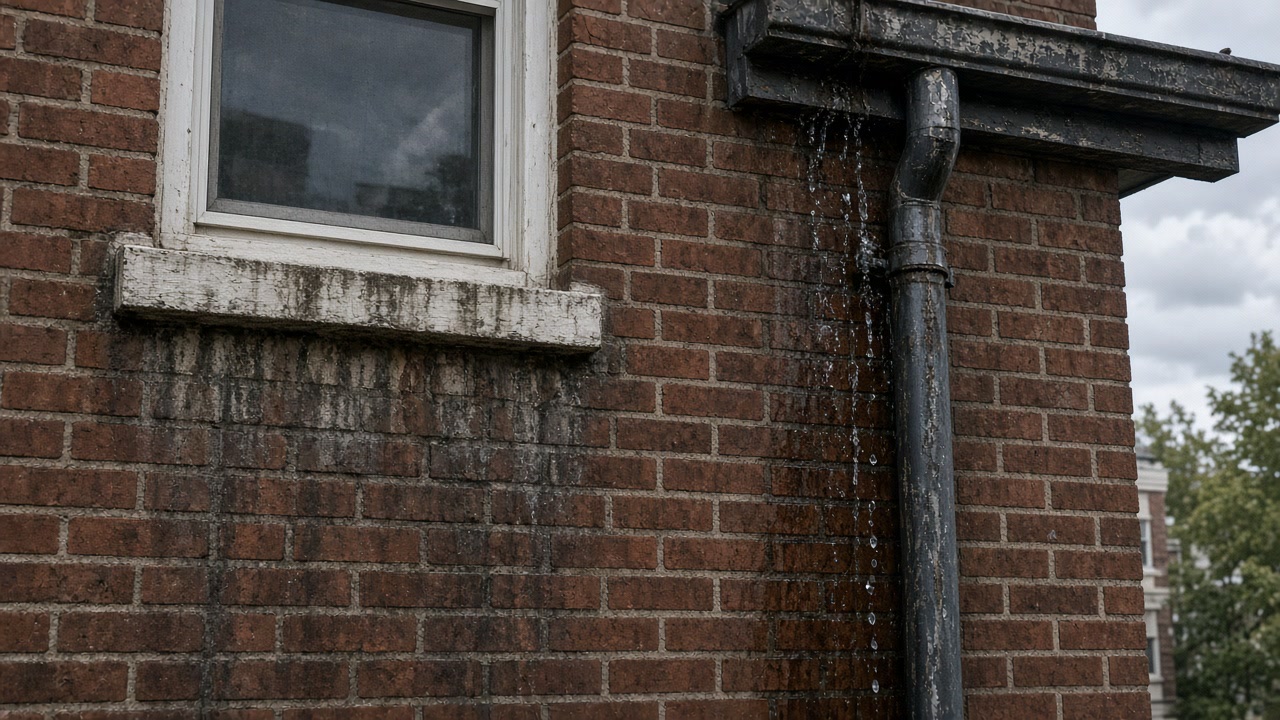
USGS elevation point queries taken across Jersey City return 156.8 feet at Pershing Field in the Heights and 6.2 feet at Exchange Place on the waterfront. The two points are about 2.5 miles apart inside the same city.
Source: US Geological Survey, 3D Elevation Program point query service, accessed 2026-09-21
Sorting the Jersey City flood claims by reported ZIP code gives 1,097 claims and about 31.5 million dollars paid in 07302 on the Downtown waterfront, against 8 claims and 44,593 dollars paid in 07307 in the Heights, across the entire record since 1978.
Source: Federal Emergency Management Agency, OpenFEMA FIMA NFIP Redacted Claims dataset v2, accessed 2026-09-21
The NJDEP combined sewer outfall inventory lists 22 active outfalls in Jersey City. Twenty one are permitted to the Jersey City Municipal Utilities Authority and discharge through the Passaic Valley Sewerage Commissioners system. The twenty second belongs to the North Hudson Sewerage Authority Adams Street plant and sits at Observer Highway and Court Street on the Hoboken line.
Source: New Jersey Department of Environmental Protection, combined sewer outfall inventory served through the NJDEP ArcGIS mapping service, accessed 2026-09-21
201 of the Jersey City flood claims, about 4.9 million dollars worth, were on policies rated in zones X, B or C, which sit outside the mapped special flood hazard area.
Source: Federal Emergency Management Agency, OpenFEMA FIMA NFIP Redacted Claims dataset v2, accessed 2026-09-21
New Jersey licenses nobody to work on mold
Search for a New Jersey mold license and you will not find one, because the state does not issue any. Its Department of Health puts it flatly: there are no state certification programs for companies performing mold or general indoor air and environmental health services. No mold assessor license, no mold remediator license, nothing for anybody here to hold. A company advertising one is naming a credential no agency grants, and that takes about a minute to check before you take their word for the size of your problem.
What you will meet instead is a list. The Department publishes lists of companies that perform mold work in homes, and the notice sitting above those lists says in capital letters that the Department DOES NOT ENDORSE OR QUALIFY the work or services provided by these private companies. Getting on it is a submission. It is routinely presented to homeowners as the second thing.
The Department then says the same thing twice, in two different documents, and it is the thing the trade quotes least. On the header of its Indoor Environmental Remediation Firms list: due to a potential conflict of interest, the NJDOH strongly recommends that the company who conducts your environmental health assessment not be the same company who conducts the remediation. In Mold Guidelines for New Jersey Residents, plainer still: consider using a different company to perform testing as well as remediation, because using the same company may present a conflict of interest and should be avoided.
Nothing in New Jersey arranges that separation for you, so we arrange it. Whoever measures the problem here never gets to sell the cure. One mile east across the Hudson, New York State requires that split by law, licenses the two roles separately and describes the rule as protection against fraud. New Jersey has no equivalent, and in a city where the diagnosis is most of the value, the arrangement is the only protection on offer.
Why send this here rather than straight to a removal company
Whoever measures the problem does not sell the cure
The finding is written by a company with no bid on the removal, and a second company prices the work against it. Both of the New Jersey Department of Health's own documents recommend exactly that, and no state rule arranges it, so it happens on purpose or it does not happen.
We start with which Jersey City you are in
Downtown ZIP 07302 has filed 1,097 flood insurance claims since 1978 and the Heights ZIP 07307 has filed eight over the same record. A scope written for one of those addresses is the wrong scope at the other, and the price follows the scope.
You get the answer on paper, not over the phone
The rooms affected, the moisture readings, the route the water is taking and what has to change to stop it, in a document built to be handed to a management company, an association, an adjuster or the city. That document is the useful part for most readers here, because most readers here do not own the wall.
Sometimes the answer is that you do not need us
The Department of Health puts anything under about 10 square feet within reach of a resident or a building's own maintenance staff, including staff at apartments and condominiums. When that is what you have, we will say so, and that is the end of it.
Coverage across Jersey City and the surrounding Hudson County area
What people usually want settled first
I can already see it. Do I need a mold test?
Usually not, and the state is direct about it. New Jersey's health department says that where a visual inspection reveals the presence of mold, additional testing is not necessary, and that resources would be better used correcting the moisture problem and cleaning up the contamination. The EPA adds the reason a sample often proves nothing: no federal limits have been set for mold or mold spores, so there is no standard to check a result against. If you can see it and you can see where the water is getting in, a test is money spent on the wrong half of the job.
How small is small enough to deal with myself?
The Department of Health booklet puts areas under about 10 square feet within reach of a homeowner or of building maintenance staff, including staff at apartments and condominiums. Between about 10 and 100 square feet it suggests getting a professional opinion, and above about 100 square feet it says to hire a contractor experienced in mold or environmental contamination cleanup. A patch behind a bathroom door is the first category, and you do not need us for it.
My basement wall is damp and it has not rained. Is something wrong?
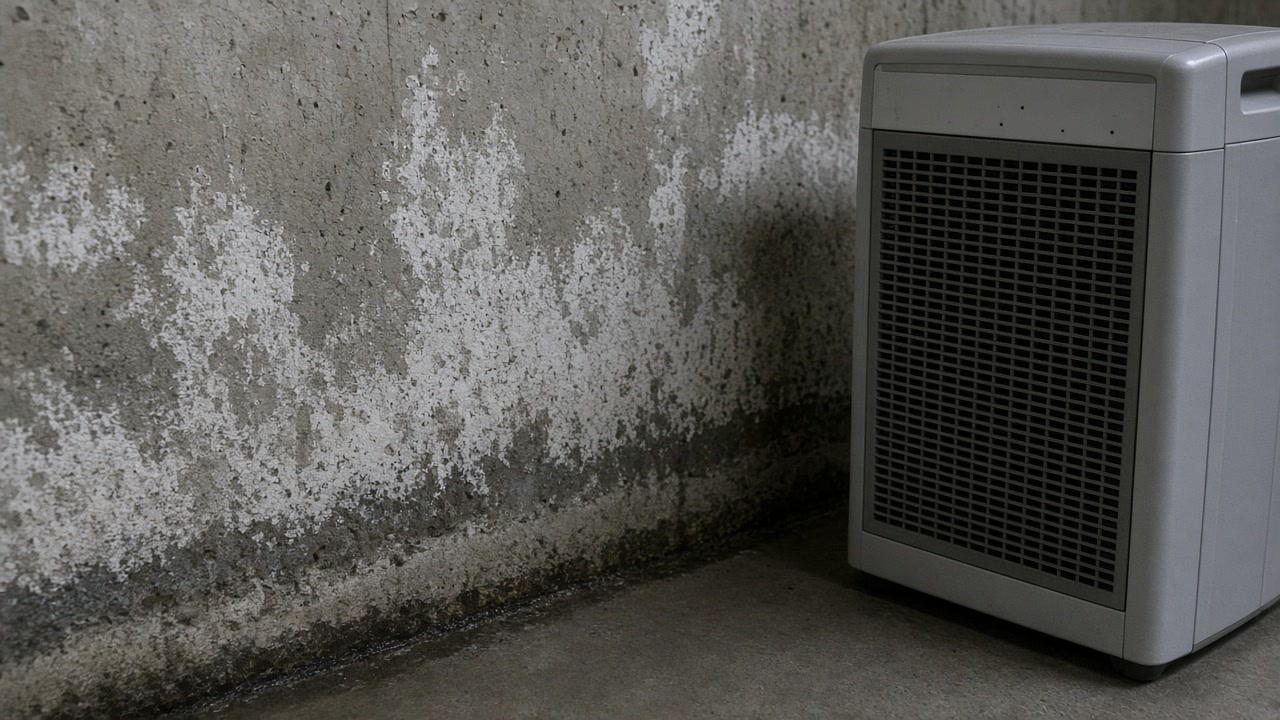
Often nothing is leaking. The NOAA normals for Newark Liberty give a mean July dew point of 63.3 degrees Fahrenheit, and summer air at that dew point condenses on any surface colder than it, which below grade in Jersey City is most of the wall. That is a dehumidifier and an air movement problem, with no leak behind it. The way to tell is whether the wall is wet where it is coldest or wet where water gets in, and that is what a walkthrough settles in an hour.
Water came up through the basement floor. Is that different from a leak?
Yes, and it changes the whole job. Jersey City runs on a combined sewer with 22 active outfalls, one line carrying stormwater and sanitary waste together, and the utility says on its own page that in heavy rainfall that line becomes inundated and sometimes overflows. Water that arrives up a floor drain has been in that line. The Department of Health says water containing sewage needs additional steps to assess, clean and decontaminate, and EPA guidance says porous material such as carpet and ceiling tile often has to be thrown out rather than dried, because mold fills the crevices and cannot be cleaned out of them.
I am renting and my landlord will not act. What can I actually do?
About 72 percent of occupied Jersey City homes are rented, so this is the majority question here. The Department of Health tells renters directly that they often have difficulty getting mold corrected, and that because of the lack of regulations government offices have little authority to cite a building owner over mold contamination. What it points renters toward instead is the local building code office, which can act on an unrepaired leak or on plumbing. That is why the written finding matters more than the removal for a tenant: a recorded water leak is something an office will act on, where a complaint about mold is not.
Why will you not have one company inspect and remove?
Because the state's own health department asks twice that it not be done that way. The header of its remediation firms list recommends that the company conducting your assessment not be the company conducting the remediation, and its guidance booklet for residents repeats that using the same company may present a conflict of interest and should be avoided. In Jersey City that matters more than average: when the cause could be a hillside drainage fault or a contaminated sewer backup, and those are jobs of very different size, you do not want the diagnosis coming from whoever gets paid for the bigger one.
Start with where you are
Phones are answered 24/7. Asking costs nothing and settles nothing until you decide it does.