What Decides the Price of a Mold Job in Jersey City
We do not price the work and no honest number can be produced from a photograph, so here is what moves it instead: the route the water took into the building, the measured area of the damage, whether material dries in place or has to leave, whether the rebuild needs a licensed contractor, whether pre-1978 paint gets disturbed, and who owns the wall.
Already know you need someone out? Call (315) 640-3590, answered 24/7.
The route the water took, which outweighs the square footage
Two rooms with identical patches can be two completely different bills, and the variable is the water's route. The Department of Health states that if the water that caused the mold contained sewage or other hazardous substances, additional steps would be required in order to assess, clean and decontaminate the area, and that a remediation plan should record information on other contaminants that could be present, especially from sewage leaks or floodwater. On a combined sewer, water arriving up a floor drain falls into that category and porous material stops being salvageable. The overstatement is just as expensive, though, so know the limit. The IICRC consensus body position statement of January 2026 records that top down water ingress, wind driven rain and water from weather related events are not automatically Category 3, that Category 3 means grossly contaminated water containing pathogenic, toxigenic or other harmful agents, and that the restorer must inspect and gather information before making that determination. If a rain leak is quoted as a contaminated tear out, ask what evidence of gross contamination was found.
How much of it there is, measured against the state's own thresholds
Area is the second variable and you can measure it before anybody arrives. The Department of Health booklet says that for small areas of under about 10 square feet a homeowner or building maintenance staff, including staff at apartments and condominiums, may be capable of doing the work; that for areas greater than about 100 square feet a qualified contractor experienced in mold or environmental contamination cleanup should be hired; and that a professional opinion should be sought for anything between the two. Those two numbers are the rough shape of the market. Below the lower one you are usually buying cleaning materials. Above the upper one you are buying containment, negative air, trained labor, disposal and a rebuild, which is a different order of job. Measure the visible area with a tape and write it down, because a scope described over the phone as the whole basement and measured on site as eleven square feet is a very different conversation.
Whether the material dries in place or leaves the building
The biggest single swing in a quote is how much material comes out, and two published rules decide most of it. The EPA says absorbent or porous materials such as ceiling tiles and carpet may have to be thrown away if they become moldy, because mold can fill the crevices of porous materials and be impossible to remove completely, and it says not to paint or caulk moldy surfaces because paint applied over them is likely to peel. Hard surfaces get cleaned and kept; drywall, carpet, insulation and ceiling tile that stayed wet usually leave. Timing decides which category yours is in. The EPA puts the window at 24 to 48 hours, stating that in most cases mold will not grow if wet materials are dried within it. That is why the cheapest version of this job is almost always the one that started the day the water arrived, and why a quote that keeps every porous material and prices a coating over the top is selling a repaint that will fail.
The rebuild is a separate trade with a separate license and its own paperwork
Half of what people call a mold price is not mold work at all. Putting a wall back is home improvement, and the Home Improvement and Home Elevation Contractor Licensing Act, P.L. 2023 chapter 237, approved January 8, 2024, creates a New Jersey State Board of Home Improvement and Home Elevation Contractors within the Division of Consumer Affairs, with licensing in effect from February 1, 2026 and home improvement defined to include repairing, restoring and renovating any part of a residential property. So ask for the removal and the rebuild as separate lines, because they are separate trades with different credentials behind them. The permit position is also worth knowing before somebody quotes around it: under the state code no permit has to be issued before minor work proceeds, but the owner or contractor must notify the enforcing agency before work begins and file a permit application within five business days, and stripping and rebuilding a wet wall in a two family is minor work. A contractor who says no paperwork is involved is half right and entirely wrong about the notice.
Pre-1978 paint decides who is allowed to open the wall
In a city with this much older housing, the age of the paint is a price variable and it catches people out. The federal Renovation, Repair and Painting Rule exempts minor repair and maintenance disturbing six square feet or less of paint per room inside, but records that window replacement and demolition of painted surfaces are always covered regardless of square footage. Cutting moldy painted drywall or plaster out of a wall is demolition of a painted surface, so the small job exemption does not rescue it in a pre-1978 building. Anyone paid to do that work must hold EPA firm certification, and the rule states that firms cannot advertise or perform covered renovation activities in pre-1978 homes without it, sole proprietorships included. In practice that narrows the field of who may legally do your job and brings containment and cleaning requirements with it, both of which show up in the price. It is also a question with a verifiable answer, so ask it early.
Who owns the wall decides who pays for it
Before you compare quotes, establish whether the bill is even yours. The New Jersey Condominium Act defines common elements to include the foundations, structural and bearing parts, supports, main walls, roofs, basements, halls, corridors, lobbies, stairways, elevators, entrances and exits, excluding anything specifically reserved or limited to a particular unit, and defines limited common elements as those reserved for the use of one or more specified units. In a Jersey City tower or a converted brownstone that has been split into units, water coming through a foundation, a main wall or a roof is the association's element, and a unit owner who commissions the repair privately can pay for something they were never liable for and weaken the claim at the same time. In a two family, the equivalent question is the party wall and the neighbor. Either way the sequence is the same: establish the water source and the ownership of the element it passes through, then price the work.
Which side of the ridge you are on changes the scope, not just the risk
Geography is a cost driver here in a way it is not in a flat city. Since 1978, ZIP code 07302 on the Downtown waterfront has recorded 1,097 flood claims and about 31.5 million dollars paid, while ZIP code 07307 in the Heights has recorded eight claims and 44,593 dollars over the same period. Those two records describe two different jobs. At the low end the likely scope is contaminated water arriving from below, porous material out, containment and disposal. On the ridge the likely scope is seepage through an old foundation wall, where the real repair is outside in drainage and grading and the inside work is comparatively light. A quote that looks identical for both addresses has not looked at either. If you are getting more than one number, make sure each contractor has said out loud which of the two they think you have, because you can compare their reasoning even when you cannot compare their prices.
The cheapest honest answer, and it is often the right one
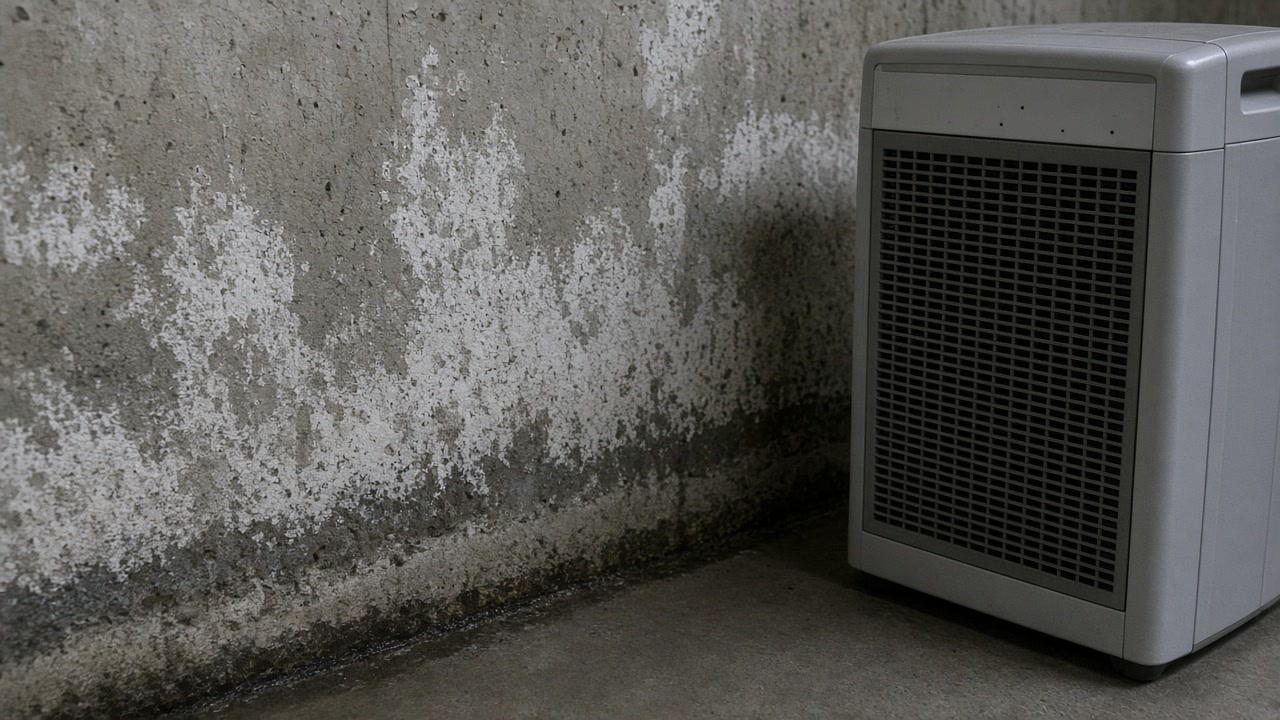
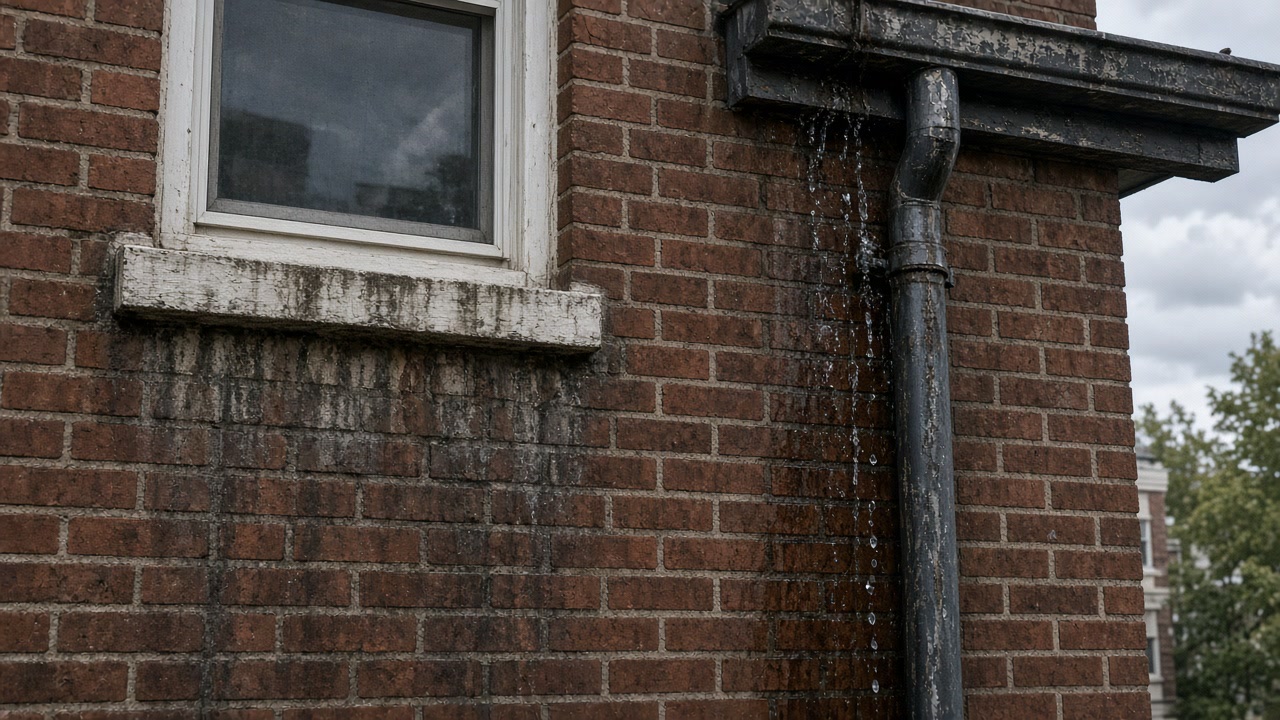
Some of what gets quoted as remediation in this city is a maintenance task and a machine. Jersey City publishes its own ordinary maintenance list of work needing no permit in any structure, and it includes interior and exterior painting, the repair or replacement of flooring material, interior trim and moldings, insulation other than foam plastic, and the repair, replacement or installation of exterior gutters and leaders. On a Heights hillside, gutters and leaders discharging away from the foundation are frequently the highest value moisture repair available and they need no permit at all. Summer damp is often not a leak either: the NOAA 1991 to 2020 normals for Newark Liberty give a mean July dew point of 63.3 degrees Fahrenheit and a mean August dew point of 62.8, so any surface colder than that collects water out of the air, and the fix is a dehumidifier on a humidistat rather than a contract. If that is your situation, we would rather tell you so than sell you something.
Why there is no price on this page, and what to ask for instead
A number printed here would be a guess about a building nobody has seen, and a guess in print is worse than no number because it becomes the figure you measure real quotes against. What we can tell you is the shape of an honest quote. It names the water source and the route. It says which materials are being removed and which are being cleaned and kept, and why. It separates the removal from the rebuild. It states the affected area as a measurement rather than as a description. And it comes from somebody who is not the same party that produced the diagnosis, which is the Department of Health's own recommendation: due to a potential conflict of interest, it strongly recommends that the company who conducts your environmental health assessment not be the same company who conducts the remediation. Send us the address, the building type and what you can see, and we will tell you which of the scopes above it looks like before anyone quotes anything.
Sources used in this guide
The booklet states that if the water that caused the mold contained sewage or other hazardous substances, additional steps would be required in order to assess, clean and decontaminate the area, and that a remediation plan should record information on other contaminants that could be present, especially from sewage leaks or floodwater.
Source: New Jersey Department of Health, Consumer, Environmental and Occupational Health Service, accessed 2026-09-21
The ANSI/IICRC S500 consensus body position statement of January 2026 says that top down water ingress, wind driven rain and water from weather related events are not automatically Category 3 water. Category 3 is defined as grossly contaminated water that can contain pathogenic, toxigenic or other harmful agents, and the restorer must inspect and gather information before making that determination.
Source: ANSI/IICRC S500 Consensus Body position statement, January 2026, accessed 2026-09-21
The same booklet says that for small areas of under about 10 square feet a homeowner or building maintenance staff, including staff at apartments and condominiums, may be capable of doing the work; that for areas greater than about 100 square feet a qualified contractor experienced in mold or environmental contamination cleanup should be hired; and that a professional opinion should be sought for anything between the two.
Source: New Jersey Department of Health, Consumer, Environmental and Occupational Health Service, accessed 2026-09-21
EPA cleanup guidance says that absorbent or porous materials such as ceiling tiles and carpet may have to be thrown away if they become moldy, because mold can fill the crevices of porous materials and be impossible to remove completely. It also says not to paint or caulk moldy surfaces, since paint applied over them is likely to peel.
Source: United States Environmental Protection Agency, accessed 2026-09-21
The EPA states that it is important to dry water damaged areas and items within 24 to 48 hours to prevent mold growth, and that in most cases mold will not grow if wet materials are dried within that window.
Source: United States Environmental Protection Agency, accessed 2026-09-21
The Home Improvement and Home Elevation Contractor Licensing Act, P.L. 2023 chapter 237, was approved January 8, 2024 and creates a New Jersey State Board of Home Improvement and Home Elevation Contractors within the Division of Consumer Affairs. Its licensing sections take effect on the first day of the twenty fifth month following enactment, which is February 1, 2026, replacing the older registration scheme. Home improvement is defined to include repairing, restoring and renovating any part of a residential property.
Source: New Jersey Legislature, P.L. 2023 chapter 237, accessed 2026-09-21
Under N.J.A.C. 5:23-2.17A no permit has to be issued before minor work may proceed, but the owner or contractor must give the enforcing agency notice before work begins and file a permit application within five business days. Minor work includes renovation or alteration in an existing one or two family dwelling where no primary structural members are altered and the work is not reconstruction, and repair or replacement with no reconfiguration of space of a non structural component such as a partition in buildings other than one and two family dwellings.
Source: New Jersey Department of Community Affairs, Uniform Construction Code, N.J.A.C. 5:23, accessed 2026-09-21
The rule exempts minor repair and maintenance that disturbs six square feet or less of paint per room inside, but records that window replacement and demolition of painted surfaces are always covered regardless of square footage.
Source: United States Environmental Protection Agency, accessed 2026-09-21
The federal Renovation, Repair and Painting Rule requires anyone paid to perform work that disturbs painted surfaces in housing built before 1978 to hold EPA firm certification, and states that firms cannot advertise or perform renovation activities covered by the rule in pre-1978 homes without that certification. It applies to all firms, including sole proprietorships.
Source: United States Environmental Protection Agency, accessed 2026-09-21
The New Jersey Condominium Act defines common elements to include, as to any improvement, the foundations, structural and bearing parts, supports, main walls, roofs, basements, halls, corridors, lobbies, stairways, elevators, entrances and exits, excluding anything specifically reserved or limited to a particular unit. Limited common elements are those common elements reserved for the use of one or more specified units.
Source: New Jersey Legislature, reproducing N.J.S.A. 46:8B-3 in Senate bill S1013 of the 221st Legislature, accessed 2026-09-21
Sorting the Jersey City flood claims by reported ZIP code gives 1,097 claims and about 31.5 million dollars paid in 07302 on the Downtown waterfront, against 8 claims and 44,593 dollars paid in 07307 in the Heights, across the entire record since 1978.
Source: Federal Emergency Management Agency, OpenFEMA FIMA NFIP Redacted Claims dataset v2, accessed 2026-09-21
Jersey City publishes its own ordinary maintenance list of work needing no permit in any structure. It includes interior and exterior painting, wall covering, the repair or replacement of any flooring material with a new material, the repair, replacement or installation of interior trim and moldings, the installation of insulation other than foam plastic, and the repair, replacement or installation of exterior gutters and leaders.
Source: City of Jersey City, Division of the Construction Code Official, accessed 2026-09-21
The NOAA 1991 to 2020 hourly climate normals for Newark Liberty International Airport, station USW00014734, give a mean July dew point of 63.3 degrees Fahrenheit and a mean August dew point of 62.8, with the hourly normal peaking at 65.6 degrees in both months.
Source: NOAA National Centers for Environmental Information, 1991-2020 US Climate Normals, accessed 2026-09-21
The header of the Department of Health list of Indoor Environmental Remediation Firms reads that due to a potential conflict of interest, the NJDOH strongly recommends that the company who conducts your environmental health assessment not be the same company who conducts the remediation.
Source: New Jersey Department of Health, Consumer, Environmental and Occupational Health Service, accessed 2026-09-21
Services this guide relates to
Need someone to look at it?
Send the details and we will come back to you.