Hudson County
Harrison Mold Removal for New Buildings on Low Ground
Tell us which floor you are on and what the wall feels like, and we will say whether this is the building's problem or yours before anybody opens anything. Harrison's riverside half is genuinely low, with the PATH station measuring 5.2 feet against 29.1 feet in the older part of town to the north, and the 7,450 feet of levee and floodwall planned to protect the redevelopment area is authorized and still in design rather than built.
Request a quote in Harrison
Tell us the street or the neighborhood, what you can see or smell, and whether the water came up through the floor or in through a wall. In this city those two answers point at different trades, different costs and often a different person who should be paying.
Would you rather talk it through? Call (315) 640-3590, answered 24/7.
$100 off your first job
Credited by us on your first booked job.
- One credit per customer per property, on your first booked job.
- Valid through December 31, 2026.
Mention this offer when you book. Full terms.
Who owns the wet wall in a Harrison apartment building
Harrison is not an old town with new buildings in it, it is a new town with an old edge, and that decides who is responsible for your damp. Its population grew 20.1 percent between 2010 and 2020, its median housing unit was built in 1990, 45.1 percent of units date from 2000 or later and 36.4 percent sit in buildings of fifty units or more. In that stock the wet wall is very unlikely to be yours. The New Jersey Condominium Act puts foundations, structural and bearing parts, main walls, roofs and basements among the common elements, and it also gives the association a right of access to a unit during reasonable hours to maintain or repair those elements, which is the lever to pull when a building is slow. Buildings of three or more units are separately registered with the Department of Community Affairs and inspected on a cycle by its Bureau of Housing Inspection, so an unrepaired leak has somewhere to go besides the managing agent. Where you sit matters as much as what you live in. Harrison's whole combined system relieves into one river: six outfalls, all permitted to the town, all discharging to the Passaic, with five active at Hamilton Avenue, Cleveland Avenue, Harrison Avenue, Middlesex Street and Worthington Avenue. The town has also put two catchments in writing as having sewers that cannot cope, the Angelo Cifeli Drive and Bergen Street drainage areas, so a basement flooding there in ordinary heavy rain is a known town condition you can cite rather than a mystery you have to prove.
Areas within Harrison: The waterfront redevelopment area, The Harrison PATH district, The older north side, The Bergen Street drainage area, The Angelo Cifeli Drive drainage area, South 1st Street
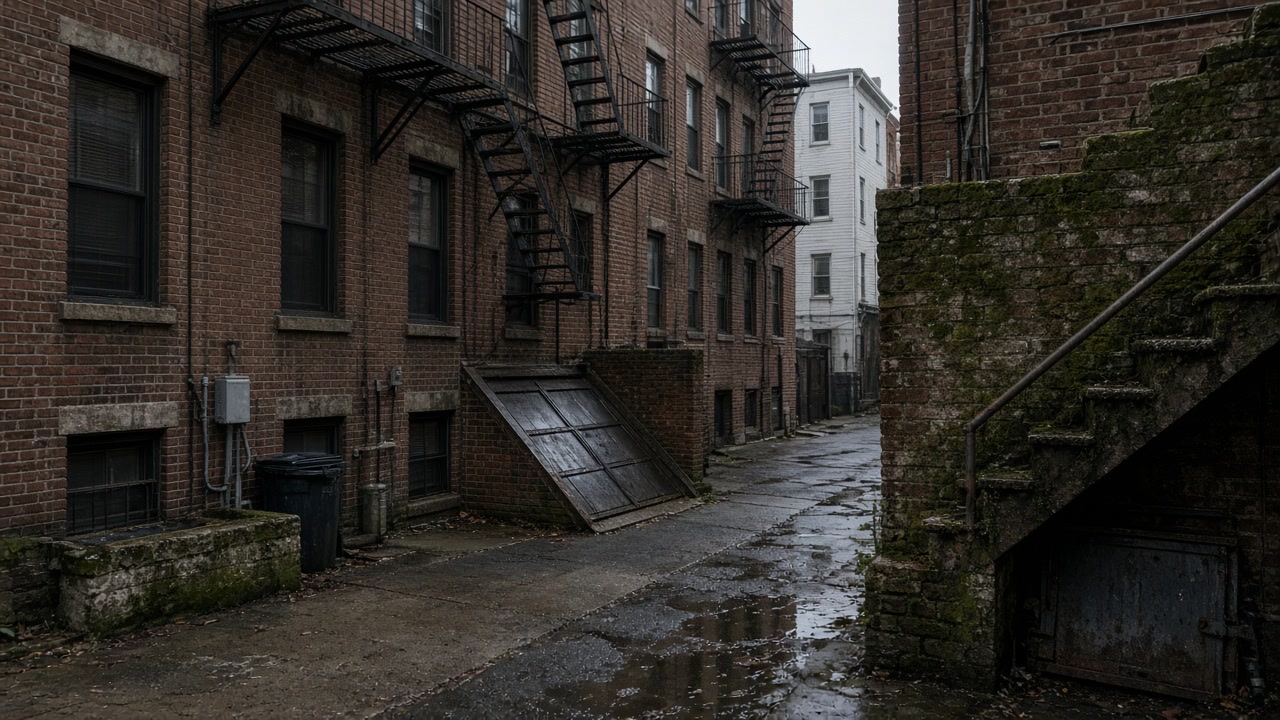
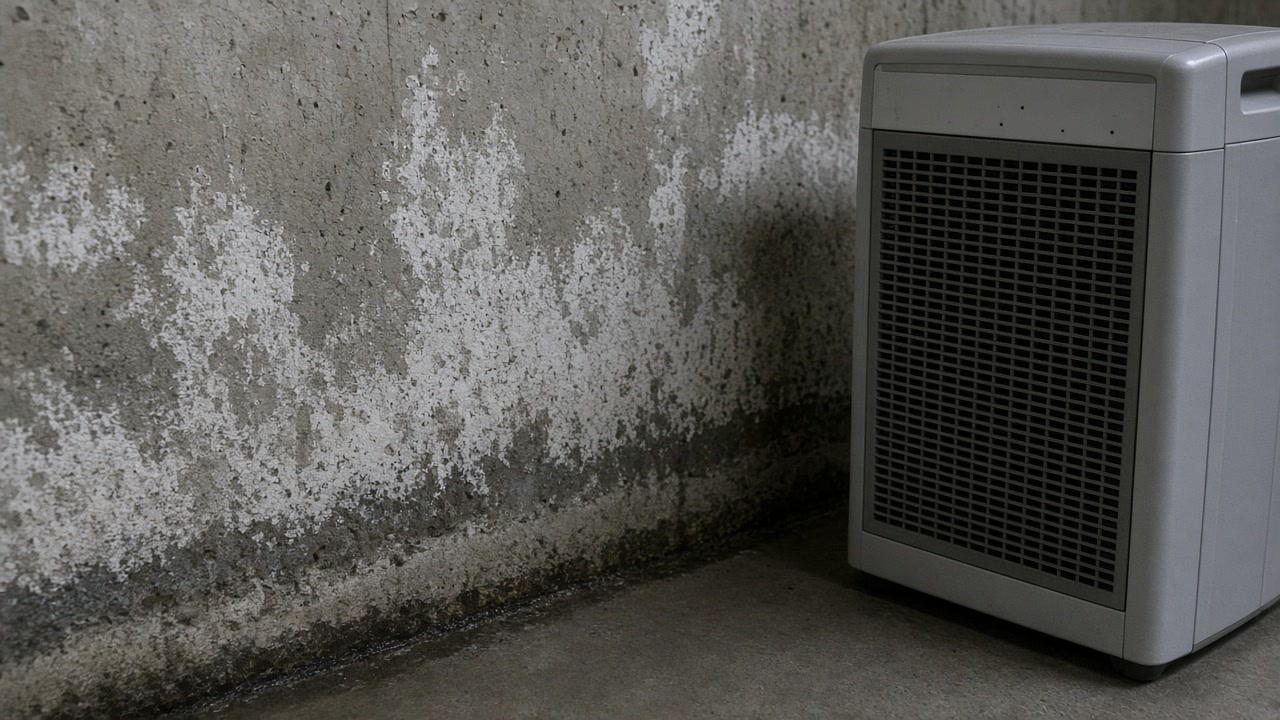
Is this the building's wall, or yours?
Tell us the building and the floor. Settling who owns the wall decides who pays for it, and it is far cheaper to settle before anyone cuts into it.
Riverside redevelopment and the older north side, both covered
Mold Inspection and Testing
Find out what is actually growing, what water is feeding it and how far it runs, in a written report from a company that is not quoting for the removal.
Mold Inspection in Harrison →Mold Remediation and Removal
Get the mold and the material holding it out of the building, with the water route closed first and the scope set by where the water came from rather than by the size of the stain.
Mold Removal in Harrison →Water Damage Drying
Get the water out and the structure dry fast enough that mold never starts, and find out on day one whether what came in can lawfully be dried in place at all.
Water Damage Drying in Harrison →Six outfalls, one river: Harrison's drainage on the record
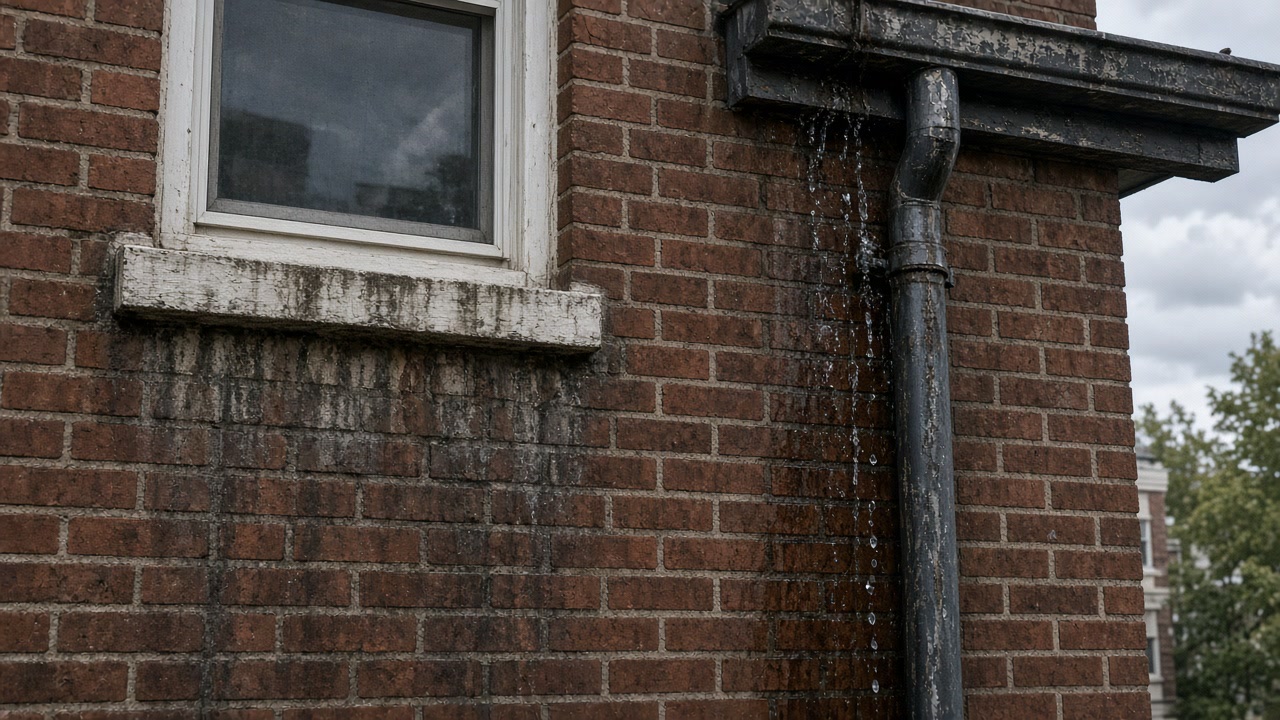
The flood protection planned for Harrison's redevelopment area, known as the South 1st Street levee and flood system, is authorized at 7,450 linear feet with eight enclosures: 1,750 feet of levee averaging 6.5 feet high and 5,700 feet of floodwall averaging 6.2 feet high, running from the Jackson Street Bridge to the NJ Transit rail bridge. The annex records the design memorandum as complete, engineering and design still under way and a Limited Reevaluation Report being prepared to reaffirm the project's viability.
Source: Hudson County Office of Emergency Management, 2025 Hudson County Hazard Mitigation Plan, accessed 2026-09-21
A USGS elevation query at the Harrison PATH station returns 5.2 feet, against 29.1 feet in the older part of town to the north. The annex lists the PATH station, its substation, PATH maintenance, the Harrison DPW facility and several other sites as sitting in the 1 percent and 0.2 percent annual chance flood zones.
Source: US Geological Survey, 3D Elevation Program point query service, accessed 2026-09-21
Harrison's population grew 20.1 percent between the 2010 and 2020 censuses to 19,450, the fastest growth in the county. Its median housing unit was built in 1990, 45.1 percent of its 10,062 units were built in 2000 or later and 38.8 percent since 2010, 36.4 percent sit in buildings of fifty units or more, and 78.9 percent of occupied units are rented.
Source: Hudson County Office of Emergency Management, 2025 Hudson County Hazard Mitigation Plan, accessed 2026-09-21
The NJDEP inventory lists six combined sewer outfalls in Harrison, all permitted to the town and all discharging to the Passaic River. Five are active at Hamilton Avenue, Cleveland Avenue, Harrison Avenue, Middlesex Street and Worthington Avenue, and one at Dey Street is sealed.
Source: New Jersey Department of Environmental Protection, combined sewer outfall inventory served through the NJDEP ArcGIS mapping service, accessed 2026-09-21
Harrison's hazard mitigation annex names two drainage areas by street: the Angelo Cifeli Drive Drainage Area and the Bergen Street Drainage Area, each described as having a combined sewer system with inadequate drainage capacity that leads to frequent localized flooding events.
Source: Hudson County Office of Emergency Management, 2025 Hudson County Hazard Mitigation Plan, accessed 2026-09-21
The Northeast Regional Climate Center records that at Harrison, New Jersey, and at Central Park, more than three months of rain fell during the 18 day period from August 18 to September 3, 2021, across the combined remnants of Fred, Henri and Ida.
Source: Northeast Regional Climate Center, Cornell University, Tropical Systems of September 2021, accessed 2026-09-21
The New Jersey Condominium Act defines common elements to include, as to any improvement, the foundations, structural and bearing parts, supports, main walls, roofs, basements, halls, corridors, lobbies, stairways, elevators, entrances and exits, excluding anything specifically reserved or limited to a particular unit. Limited common elements are those common elements reserved for the use of one or more specified units.
Source: New Jersey Legislature, reproducing N.J.S.A. 46:8B-3 in Senate bill S1013 of the 221st Legislature, accessed 2026-09-21
The Condominium Act also provides that the association shall have access to each unit from time to time during reasonable hours as may be necessary for the maintenance, repair or replacement of any common elements in it or accessible from it, or for making emergency repairs necessary to prevent damage to common elements or to any other unit.
Source: New Jersey Legislature, reproducing N.J.S.A. 46:8B-15(b) in Senate bill S1013 of the 221st Legislature, accessed 2026-09-21
New Jersey's Hotel and Multiple Dwelling Law covers buildings of three or more units, which must be registered with the Department of Community Affairs and are inspected by its Bureau of Housing Inspection on a cycle. Buildings of one and two units fall outside that state inspection system.
Source: New Jersey Department of Community Affairs, Bureau of Housing Inspection, accessed 2026-09-21
October 1, 2020 was the submission deadline for all New Jersey combined sewer overflow Long Term Control Plans. The public information site run jointly by the Jersey City MUA and the other Passaic Valley and North Bergen permittees states that the current Long Term Control Plan is under review by NJDEP and, to date, has not been accepted.
Source: Clean Waterways, Healthy Neighborhoods, the joint public information program of the PVSC and NBMUA combined sewer permittees including the Jersey City MUA, accessed 2026-09-21
New apartment, older problem than it looks
Send a photo and the floor number. We will tell you whether this reads as envelope, ventilation or something behind the wall. No obligation.