Mold Inspection in Harrison: Naming Whose Wall Is Wet
Give us the building and the floor. What comes back is a written finding saying where the water enters and who owns the wall it enters through.
Mold Inspection quote in Harrison
Tell us the street or the neighborhood, what you can see or smell, and whether the water came up through the floor or in through a wall. In this city those two answers point at different trades, different costs and often a different person who should be paying.
Would you rather talk it through? Call (315) 640-3590, answered 24/7.
$100 off your first job
Credited by us on your first booked job.
- One credit per customer per property, on your first booked job.
- Valid through December 31, 2026.
Mention this offer when you book. Full terms.
Why a Harrison finding starts with the ownership question
In Harrison the expensive question is not what the mold is, it is whose wall it is growing on. This is a new town with an old edge: the population grew 20.1 percent between 2010 and 2020, the median housing unit dates from 1990, 45.1 percent of units were built in 2000 or later and 36.4 percent sit in buildings of fifty units or more. In that stock the Condominium Act puts foundations, structural and bearing parts, main walls, roofs and basements among the common elements, so an independent report naming the entry point is what moves an association. An argument in a hallway is not.
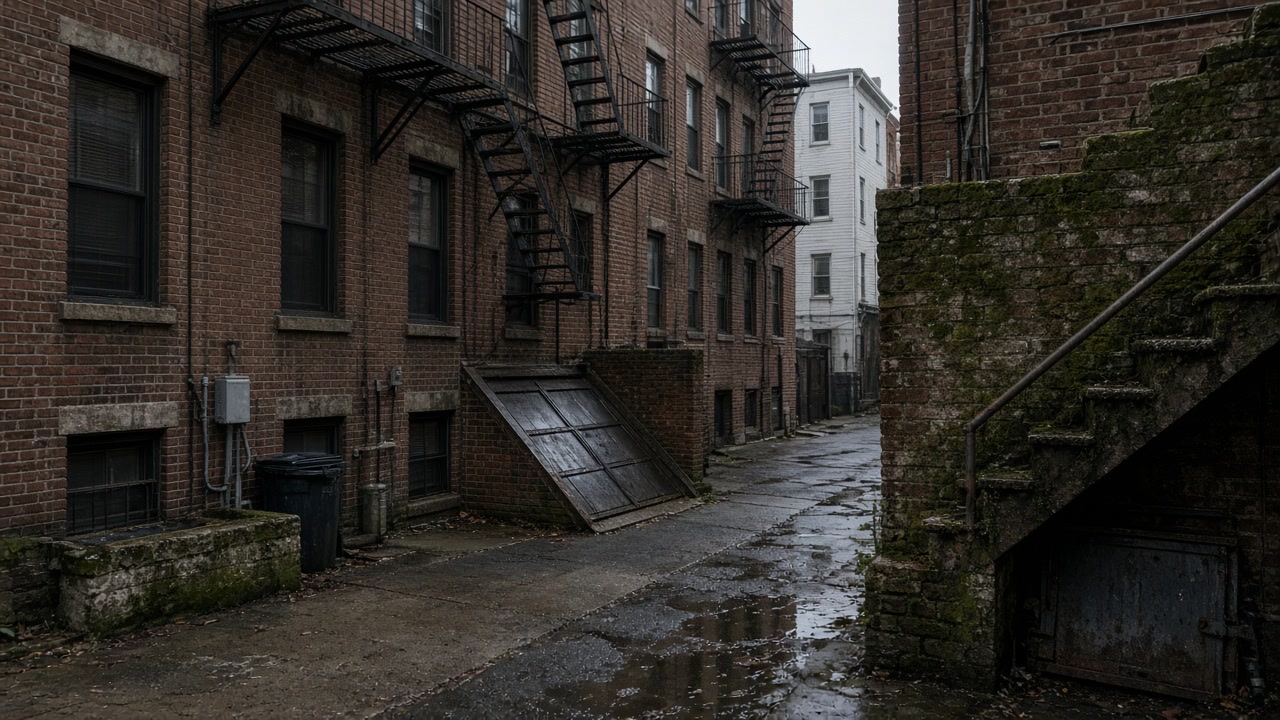
What mold inspection involves in Harrison
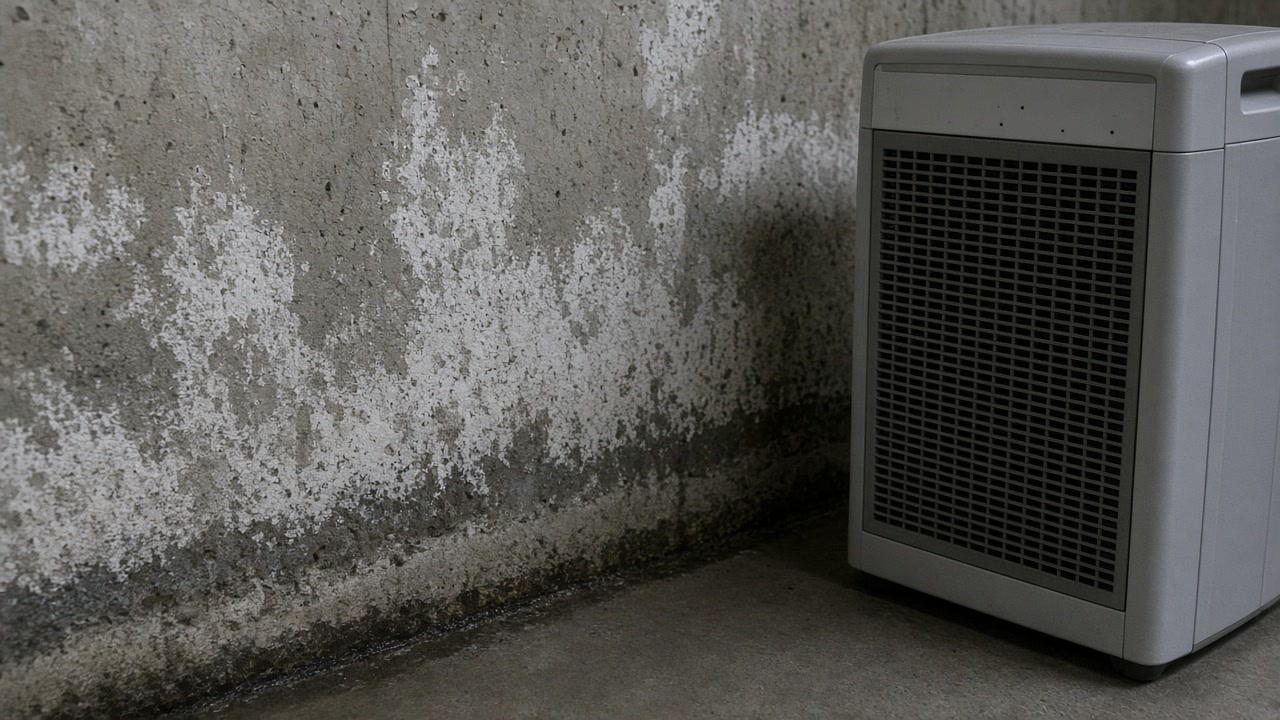
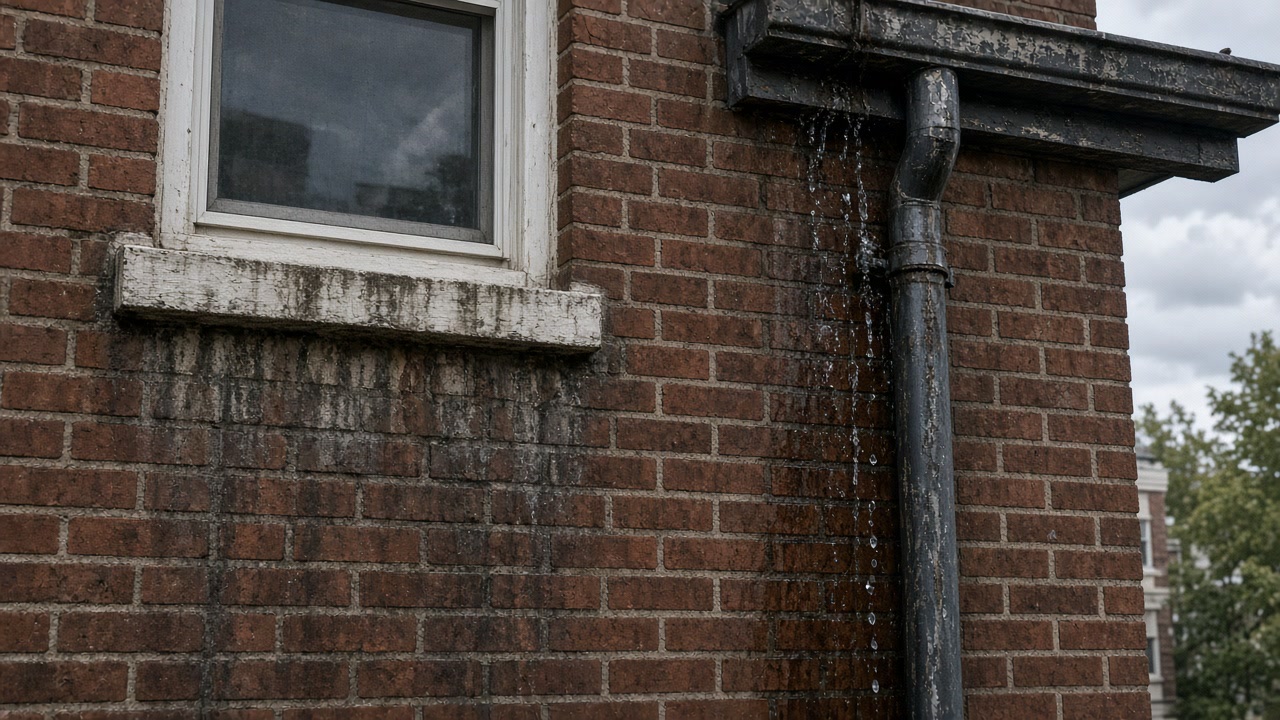
Five feet by the PATH, twenty nine up the hill
Weigh where your building sits on the drop before you decide what the visit should measure. USGS returns 5.2 feet at the Harrison PATH station against 29.1 feet in the older part of town to the north, and the annex lists the PATH station, its substation, PATH maintenance and the town DPW facility among sites sitting in the 1 percent and 0.2 percent annual chance flood zones. Weigh second what you are allowed to open at all: a unit owner who pays to cut into a common element can discover the association was the party entitled to do it, and the Act gives the association access to a unit during reasonable hours to maintain or repair those elements.
Whether the wet wall is a common element
The Condominium Act lists foundations, structural and bearing parts, supports, main walls, roofs and basements as common elements. If yours is one of those, the repair is not yours to commission.
Which end of town the building is on
5.2 feet at the PATH station, 29.1 feet in the older part to the north. The annex puts the station, its substation and the DPW facility inside mapped flood zones.
Whether you rent rather than own
78.9 percent of occupied Harrison units are rented. For a tenant the first step is a dated written notice describing the water, not a contractor's visit.
Harrison's new stock and low ground, read as evidence
Harrison's population grew 20.1 percent between the 2010 and 2020 censuses to 19,450, the fastest growth in the county. Its median housing unit was built in 1990, 45.1 percent of its 10,062 units were built in 2000 or later and 38.8 percent since 2010, 36.4 percent sit in buildings of fifty units or more, and 78.9 percent of occupied units are rented.
Source: Hudson County Office of Emergency Management, 2025 Hudson County Hazard Mitigation Plan, accessed 2026-09-21
The New Jersey Condominium Act defines common elements to include, as to any improvement, the foundations, structural and bearing parts, supports, main walls, roofs, basements, halls, corridors, lobbies, stairways, elevators, entrances and exits, excluding anything specifically reserved or limited to a particular unit. Limited common elements are those common elements reserved for the use of one or more specified units.
Source: New Jersey Legislature, reproducing N.J.S.A. 46:8B-3 in Senate bill S1013 of the 221st Legislature, accessed 2026-09-21
A USGS elevation query at the Harrison PATH station returns 5.2 feet, against 29.1 feet in the older part of town to the north. The annex lists the PATH station, its substation, PATH maintenance, the Harrison DPW facility and several other sites as sitting in the 1 percent and 0.2 percent annual chance flood zones.
Source: US Geological Survey, 3D Elevation Program point query service, accessed 2026-09-21
The Condominium Act also provides that the association shall have access to each unit from time to time during reasonable hours as may be necessary for the maintenance, repair or replacement of any common elements in it or accessible from it, or for making emergency repairs necessary to prevent damage to common elements or to any other unit.
Source: New Jersey Legislature, reproducing N.J.S.A. 46:8B-15(b) in Senate bill S1013 of the 221st Legislature, accessed 2026-09-21
Your wall, or the building's?
Tell us the floor and which way the damp runs. Settling that before anyone cuts is the cheapest hour of this.
Once the wall is named: removal and drying in Harrison
Harrison renters and owners ask these first
The managing agent says the damp is condensation and therefore my problem. How do I test that?
With a finding that separates the two. An inspection records where the moisture actually sits, with meter readings taken in the cavity rather than on the surface, and traces the route: down from a facade or a window head, across from a neighboring unit, up from the slab, or out of warm indoor air onto a cold surface. Condensation and envelope failure look identical on a painted wall and behave nothing alike behind it.
Can the association refuse to let anyone in to look?
The Condominium Act runs the other way. It provides that the association shall have access to each unit during reasonable hours as may be necessary for the maintenance, repair or replacement of any common elements in it or accessible from it, or for emergency repairs to prevent damage. Where main walls, foundations and basements are common elements, the repair sits with the association and so does the access.
Send the building and the floor number
Two lines about where the damp shows and when it started is enough to plan a visit.