Mold Inspection in Kearny When the Flood Map Says You Are Fine
Send the address and what the water did. You get a dated written finding, from a company with no stake in the removal that may follow it.
Mold Inspection quote in Kearny
Tell us the street or the neighborhood, what you can see or smell, and whether the water came up through the floor or in through a wall. In this city those two answers point at different trades, different costs and often a different person who should be paying.
Would you rather talk it through? Call (315) 640-3590, answered 24/7.
$100 off your first job
Credited by us on your first booked job.
- One credit per customer per property, on your first booked job.
- Valid through December 31, 2026.
Mention this offer when you book. Full terms.
Kearny's claims, policies and elevations side by side
Kearny's hazard mitigation annex records 277 flood insurance claims and about 30.5 million dollars in loss payments, against just 70 flood insurance policies in force and 12 repetitive loss properties.
Source: Hudson County Office of Emergency Management, 2025 Hudson County Hazard Mitigation Plan, accessed 2026-09-21
178 of Kearny's 285 flood insurance claims, about 62 percent, were on policies rated in zones C, X or B, all of which sit outside the mapped special flood hazard area. 153 of the 285 were coded rainfall or snowmelt against 86 tidal.
Source: Federal Emergency Management Agency, OpenFEMA FIMA NFIP Redacted Claims dataset v2, accessed 2026-09-21
USGS elevation queries in Kearny return 105.5 feet at Kearny Avenue near Midland Avenue on the upland, 0.7 feet at Schuyler Avenue on the Meadowlands side and 8.8 feet in South Kearny.
Source: US Geological Survey, 3D Elevation Program point query service, accessed 2026-09-21
Mold Guidelines for New Jersey Residents specifies what the written record should contain: The consultant should provide a written inspection report that includes a summary of all the areas inspected, the cause of the mold growth, how to take care of the problem and any sampling results.
Source: New Jersey Department of Health, accessed 2026-09-21
The Department of Health guidance booklet for residents states that if a visual inspection reveals the presence of mold, additional testing is not necessary, and that resources would be better used correcting the moisture problem and cleaning up the contamination.
Source: New Jersey Department of Health, Consumer, Environmental and Occupational Health Service, accessed 2026-09-21
The paperwork gap behind Kearny's 30.5 million dollars
A Kearny inspection earns its fee by producing the document nobody else in this chain has. The town's hazard mitigation annex records 277 flood insurance claims and about 30.5 million dollars in loss payments against just 70 flood insurance policies in force today, so the overwhelming majority of wet basements here were paid for by somebody with no policy and no file. Where the map does not call your street at risk and no adjuster ever came, the inspection report is the record: areas inspected, the cause of the growth, how to deal with it, and any sampling results.
What a flood zone does not tell a Kearny owner
Weigh how much the flood map is actually telling you. 178 of Kearny's 285 claims, about 62 percent, were on policies rated in zones C, X or B, all of which sit outside the mapped special flood hazard area, and 153 of the 285 were coded rainfall or snowmelt against 86 tidal. A rated zone is a statement about a river, not about your downspout, your grading or the pipes under your street. Weigh the elevation of your own block second: USGS returns 105.5 feet at Kearny Avenue near Midland Avenue on the upland, 8.8 feet in South Kearny and 0.7 feet on Schuyler Avenue, which is three different towns as far as water is concerned.
Whether your water history exists on paper at all
277 claims and about 30.5 million dollars paid, against 70 policies in force and 12 repetitive loss properties. Most of the damage in this town left no insurance record behind it.
Where your block sits between 105 feet and zero
USGS returns 105.5 feet on the upland at Kearny Avenue, 8.8 feet in South Kearny and 0.7 feet on Schuyler Avenue. The readings worth taking are not the same at those three heights.
What the report has to contain to be worth anything later
The state guidance sets it out: a summary of all areas inspected, the cause of the mold growth, how to take care of the problem, and any sampling results.
Off the map and still taking water?
That is the common case here. Send the street and we will say what a visit would measure.
What follows a Kearny report, and who carries it out
Kearny owners ask this before booking an inspection
My house is not in a flood zone, so why is the basement wet every spring?
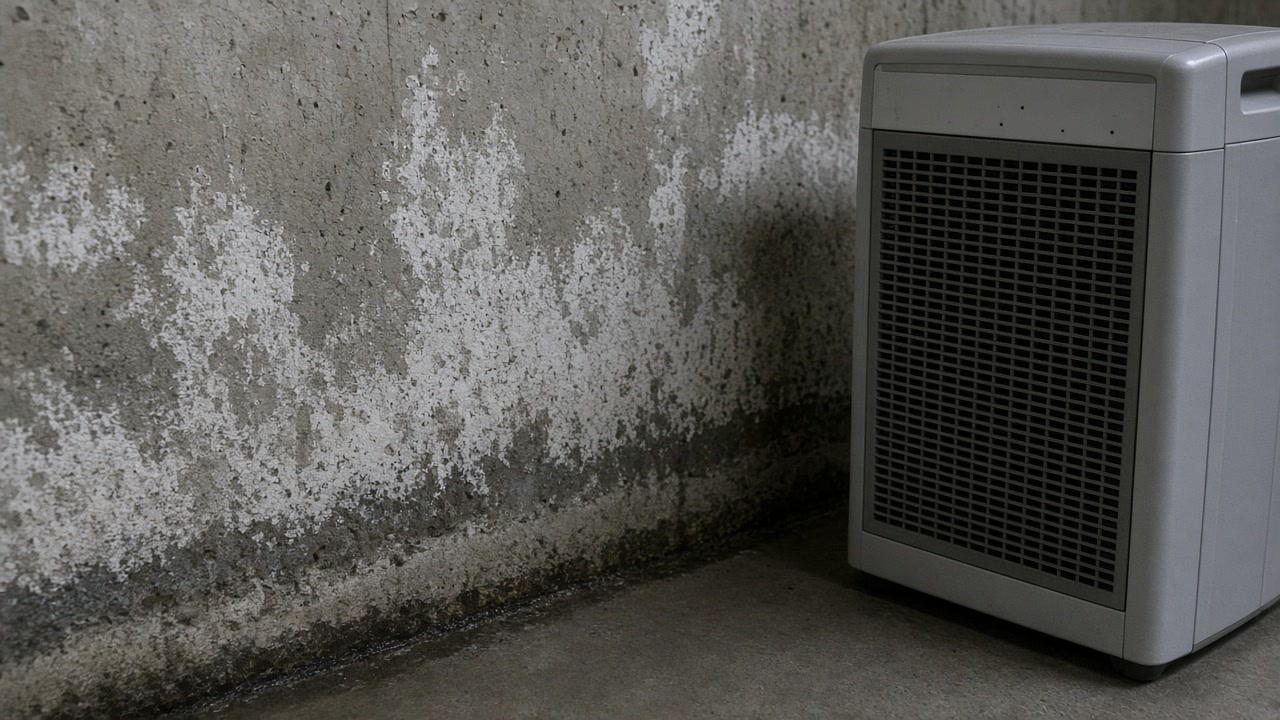
Because the zone is drawn for river and tidal flooding and most of the water here is neither. 153 of Kearny's 285 flood insurance claims are coded rainfall or snowmelt, and 178 of them were on policies rated outside the mapped hazard area entirely. Groundwater, runoff coming off an upland street and a surcharged line all arrive without the map ever changing.
Do I need a test, or will a look do?
If you can see it and you know where the water is coming from, a sample usually confirms what you already know. The Department of Health says outright that where a visual inspection reveals mold, additional testing is not necessary. In Kearny the part worth buying is the water route finding, because that is what settles which of the town's two drainage systems you are arguing with.
Which half of Kearny is this?
The upland and the Meadowlands side need different visits. Say which, and describe the water.