No New Jersey Mold License Exists. What You Can Check Instead
No. Nobody in New Jersey holds a state credential to work on household mold, because the state issues none for either the inspection or the removal, and the Department of Health says so in print. What trips people up is the artifact the absence left behind: the Department publishes lists of private mold companies and states on the same page, in capital letters, that it DOES NOT ENDORSE OR QUALIFY them.
Already know you need someone out? Call (315) 640-3590, answered 24/7.
The state says it in one sentence: no certification program exists
The New Jersey Department of Health states that there are no state certification programs for companies performing mold or general indoor air and environmental health services. Read that literally, because it is meant literally. Nobody sat an examination the state set, nobody was checked against a state standard, and no agency can suspend anyone for doing the work badly. That is not a loophole somebody is exploiting. It is the whole legal position, and it applies to the good companies in this market exactly as it applies to the poor ones. The practical consequence for a homeowner in Jersey City is that the vetting cannot be handed off to Trenton. Whatever comfort you would normally take from a state credential has to come from somewhere else, and the rest of this guide is about where.
A listing is not a vetting, and the listing says so itself
What a homeowner actually meets is not an absence, because an absence is invisible. It is a presence. A company says it is on the New Jersey Department of Health list of mold remediation firms, and that sounds like somebody checked. The Department publishes those lists and prints a notice above them stating in capital letters that it DOES NOT ENDORSE OR QUALIFY the work or services provided by these private companies. The separate listing of general industrial hygiene and indoor air quality consultants for residential work carries the same disclaimer on its own first page: the listing is provided as a service to New Jersey residents, and the Department does not endorse or qualify the services of these companies. Being on the list means a company asked to be on the list. Use it to find candidates and then do the checking yourself, which is precisely what the Department intends.
The conflict of interest warning appears on both lists, not one
This is the part worth reading twice. The header of the Department list of Indoor Environmental Remediation Firms says that due to a potential conflict of interest, the NJDOH strongly recommends that the company who conducts your environmental health assessment not be the same company who conducts the remediation. The first page of the consultants listing carries the identical note. And the Department booklet written for residents rather than for contractors says it a third time: consider using a different company to perform testing as well as remediation, because using the same company may present a conflict of interest and should be avoided. Three separate documents, the same instruction, which makes it the Department's position and not one document's boilerplate. Nothing in New Jersey law enforces it, so the arrangement it warns against is legal and common. That is the gap a homeowner has to close on their own, and the simplest way to close it is to buy the diagnosis from someone who cannot sell you the cure.
The one indoor environmental license the state does issue is for schools
New Jersey does license Indoor Environmental Consultants, which is why the licensing question produces such confusing answers. That program covers consultants conducting Indoor Environmental Health Assessments in child care centers and educational facilities, and the application carries a non refundable fee of 2,000 dollars. It is not a household credential and it was never meant to be one. So when a company tells you it is licensed, the useful follow up is one question: which license, and what does it cover. If the answer is the Indoor Environmental Consultant license, that license is for schools and child care centers, not for a two family house on Palisade Avenue or a unit in a Newport tower. If the answer is a home improvement license, that covers the rebuild, which is a different half of the job and is explained further down this page.
What you can actually verify in Jersey City, starting with the register
There is real paperwork to ask for, it is just local rather than state level. The Jersey City Division of the Construction Code Official registers non state licensed contractors, and the city states that a Jersey City contractor license is required for all non state licensed contractors and for all work done on a commercial property. Mold remediation is not a state licensed trade, which puts a remediation company squarely in the class the city requires to register. So ask for the Jersey City registration, not only for a state number. Ask for proof of insurance in the company's own name and read the dates. Ask for training records rather than logos: IICRC credentials are worth having and the IICRC is a private non profit body for the inspection, cleaning and restoration industries run by an elected board, not a government agency, so nobody official checked the certificate before the van arrived. Ask to see it.
The rebuild half of the job does need a state license, from February 2026
One half of a mold job became a licensed trade this year and most homeowners have not been told. The Home Improvement and Home Elevation Contractor Licensing Act, P.L. 2023 chapter 237, was approved on January 8, 2024 and creates a New Jersey State Board of Home Improvement and Home Elevation Contractors within the Division of Consumer Affairs, with its licensing sections taking effect on February 1, 2026 in place of the older registration scheme. Home improvement is defined to include repairing, restoring and renovating any part of a residential property, which is exactly what putting a wall back is. So the demolition and cleaning half needs no state credential at all, and the drywall, trim and flooring half now needs a licensed contractor. Ask which half of your job the license on the quote actually covers, because in New Jersey it is only ever one of them.
In a pre-1978 building, a federal rule decides who may open the wall
Jersey City is full of buildings old enough for this to matter, and this requirement is real, enforceable and easy to check. The federal Renovation, Repair and Painting Rule requires anyone paid to perform work that disturbs painted surfaces in housing built before 1978 to hold EPA firm certification, and states that firms cannot advertise or perform covered renovation activities in pre-1978 homes without it. It applies to every firm, sole proprietors included. The small job exemption does not rescue a mold job: the rule exempts minor repair and maintenance disturbing six square feet or less of paint per room, but records that demolition of painted surfaces is always covered regardless of square footage, and cutting out moldy painted drywall or plaster is demolition of a painted surface. EPA runs this program directly in New Jersey, since the state is not among the fifteen jurisdictions authorized to run their own, so the certification is verifiable federally rather than through Trenton.
A mile east across the river, the same arrangement is illegal
It helps to know that the thing you are being asked to tolerate is not universal. Across the Hudson, New York State requires one license for the person who assesses mold and a separate license for the contractor who removes it, and prohibits the same individual or company from performing both roles on the same property, describing that rule as protection against fraud. New Jersey has no equivalent requirement. The river is the only reason your situation is different from a homeowner's a mile east, and it is a fair measure of how much of the checking falls on you on this side. It also reframes the offer of an inspection at no charge from the company that wants the removal work. That is not generosity and it is not sinister either. It is a sales visit, priced into the job that follows, and the party deciding how much work is needed is the party that gets paid for the work.
Whether this is about to change, as the bills stood on September 21, 2026
It might change, and it has not yet, so treat any claim that New Jersey now regulates mold with care. Assembly bill A4952 of the 2026 session would establish a registration requirement for mold inspection and remediation contractors with the Division of Consumer Affairs. Its entire legislative history is one line: introduced and referred to the Assembly Regulated Professions Committee on May 7, 2026. The identical Senate bill S3275 was introduced and referred to the Senate Commerce Committee on February 2, 2026 with no further action, and both are linked to a bill from the previous session that did not become law. As introduced, A4952 would also prohibit a contractor from performing both the inspection and the remediation at the same premises, with a civil penalty of up to 5,000 dollars for a first offense and revocation for a later one. So the arrangement the Legislature is being asked to outlaw is the normal way this trade sells here today. Until the bill moves there is no register to look anyone up in, and the checking stays yours. We keep the assessment and the removal in different hands already, and put the findings in writing.
Sources used in this guide
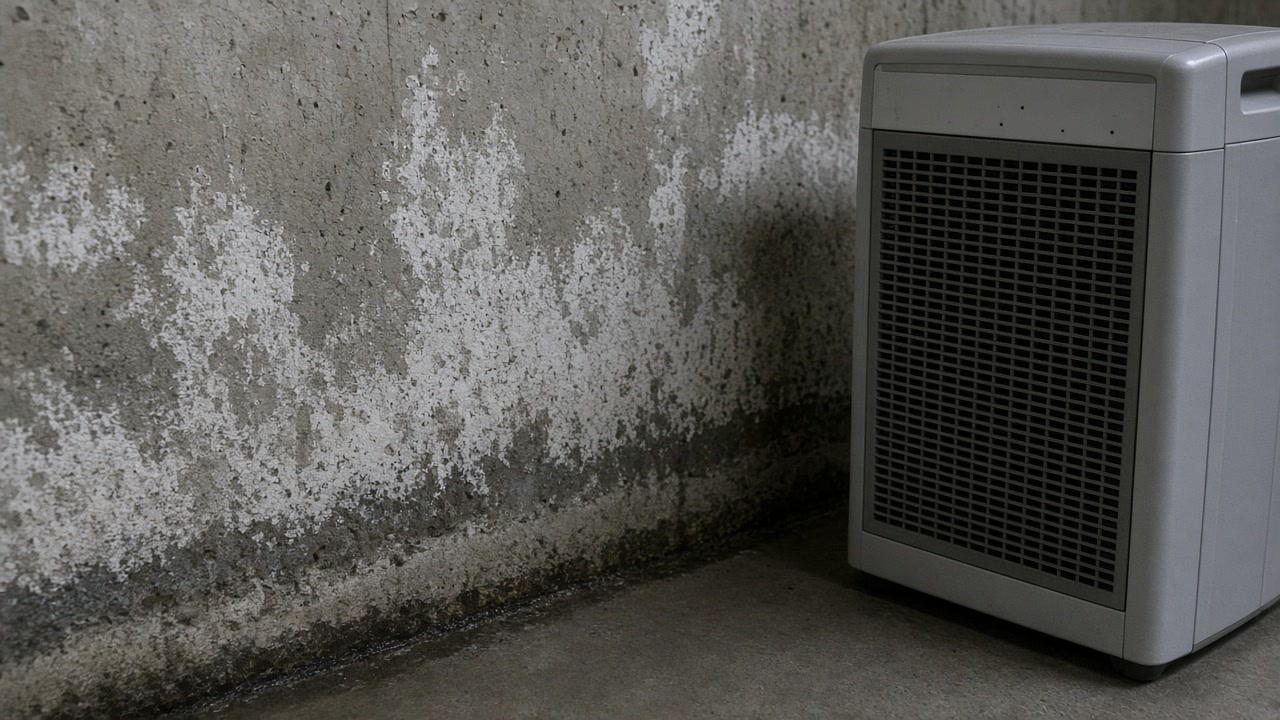
The New Jersey Department of Health states that there are no state certification programs for companies performing mold or general indoor air and environmental health services.
Source: New Jersey Department of Health, Consumer, Environmental and Occupational Health Service, accessed 2026-09-21
The New Jersey Department of Health publishes lists of companies that perform mold work in homes, and the notice above those lists states in capital letters that the Department DOES NOT ENDORSE OR QUALIFY the work or services provided by these private companies.
Source: New Jersey Department of Health, Consumer, Environmental and Occupational Health Service, accessed 2026-09-21
The Department of Health listing titled General Industrial Hygiene/IAQ Consultants for Residential Work carries this line on its first page: This listing is being provided as a service to New Jersey Residents. The NJDOH does not endorse or qualify the services of these companies.
Source: New Jersey Department of Health, Consumer, Environmental and Occupational Health Service, Environmental and Occupational Health Assessment Program, accessed 2026-09-21
The header of the Department of Health list of Indoor Environmental Remediation Firms reads that due to a potential conflict of interest, the NJDOH strongly recommends that the company who conducts your environmental health assessment not be the same company who conducts the remediation.
Source: New Jersey Department of Health, Consumer, Environmental and Occupational Health Service, accessed 2026-09-21
The same first page of the Department of Health consultant listing carries this note: Due to a potential conflict of interest, the NJDOH strongly recommends that the company who conducts your environmental health assessment not be the same company who conducts the remediation.
Source: New Jersey Department of Health, Consumer, Environmental and Occupational Health Service, Environmental and Occupational Health Assessment Program, accessed 2026-09-21
Mold Guidelines for New Jersey Residents tells homeowners: Consider using a different company to perform testing as well as remediation. Using the same company may present a conflict of interest and should be avoided.
Source: New Jersey Department of Health, accessed 2026-09-21
New Jersey does license Indoor Environmental Consultants, but the program covers consultants conducting Indoor Environmental Health Assessments in child care centers and educational facilities, and the application carries a non refundable fee of 2,000 dollars.
Source: New Jersey Department of Health, Consumer, Environmental and Occupational Health Service, accessed 2026-09-21
The Jersey City Division of the Construction Code Official registers non state licensed contractors, and the city states that a Jersey City contractor license is required for all non state licensed contractors and for all work done on a commercial property.
Source: City of Jersey City, Division of the Construction Code Official, accessed 2026-09-21
The IICRC is a private non profit body for the inspection, cleaning and restoration industries, run by an elected board of directors. It is not a government or state agency.
Source: Institute of Inspection, Cleaning and Restoration Certification, accessed 2026-09-21
The Home Improvement and Home Elevation Contractor Licensing Act, P.L. 2023 chapter 237, was approved January 8, 2024 and creates a New Jersey State Board of Home Improvement and Home Elevation Contractors within the Division of Consumer Affairs. Its licensing sections take effect on the first day of the twenty fifth month following enactment, which is February 1, 2026, replacing the older registration scheme. Home improvement is defined to include repairing, restoring and renovating any part of a residential property.
Source: New Jersey Legislature, P.L. 2023 chapter 237, accessed 2026-09-21
The federal Renovation, Repair and Painting Rule requires anyone paid to perform work that disturbs painted surfaces in housing built before 1978 to hold EPA firm certification, and states that firms cannot advertise or perform renovation activities covered by the rule in pre-1978 homes without that certification. It applies to all firms, including sole proprietorships.
Source: United States Environmental Protection Agency, accessed 2026-09-21
The rule exempts minor repair and maintenance that disturbs six square feet or less of paint per room inside, but records that window replacement and demolition of painted surfaces are always covered regardless of square footage.
Source: United States Environmental Protection Agency, accessed 2026-09-21
EPA administers the Renovation, Repair and Painting program directly in most states, tribes and territories, and publishes the list of fifteen jurisdictions authorized to run their own programs instead. New Jersey is not on that list.
Source: United States Environmental Protection Agency, accessed 2026-09-21
Across the Hudson, New York State requires one license for the person who assesses mold and a separate license for the contractor who removes it, and prohibits the same individual or company from performing both roles on the same property, describing the rule as protection against fraud. New Jersey has no equivalent requirement.
Source: New York State Department of Labor, accessed 2026-09-21
Assembly bill A4952 of the 2026 session would establish a registration requirement for mold inspection and remediation contractors with the Division of Consumer Affairs. Its complete legislative history is a single entry: introduced and referred to the Assembly Regulated Professions Committee on May 7, 2026. Its identical Senate bill S3275 was introduced and referred to the Senate Commerce Committee on February 2, 2026, and has no further action either. Both are linked to S4783 of the previous session, which did not become law. As of September 21, 2026 neither bill has moved and neither is law.
Source: New Jersey Legislature, accessed 2026-09-21
As introduced, A4952 would also prohibit a mold inspection and remediation contractor from performing both the inspection and the remediation or abatement work at the same premises, with a civil penalty of up to 5,000 dollars for a first offense and revocation of registration for any later one.
Source: New Jersey Legislature, Assembly bill A4952 as introduced, accessed 2026-09-21
Services this guide relates to
Need someone to look at it?
Send the details and we will come back to you.