Jersey City and the surrounding Hudson County area
Water Damage Drying in Jersey City, Inside the Window That Matters
Get the water out and the structure dry fast enough that mold never starts, and find out on day one whether what came in can lawfully be dried in place at all.
Water Damage Drying quote
Tell us when the water arrived, where it came in, and what is still wet right now. If it is still coming in, phone instead of typing: on the first day the clock matters more than the detail.
Would you rather talk it through? Call (315) 640-3590, answered 24/7.
$100 off your first job
Credited by us on your first booked job.
- One credit per customer per property, on your first booked job.
- Valid through December 31, 2026.
Mention this offer when you book. Full terms.
What drying achieves, and the two questions that decide it
What you get is the water out and the materials dry before this becomes a mold problem: extraction, air movement, dehumidification, and meter readings that say when the structure is genuinely dry rather than when it feels dry. The EPA puts mold growth on wet material at roughly 24 to 48 hours and says that in most cases it will not grow if wet materials are dried inside that window, which is why the first day decides more than everything after it. The second thing that decides the job is where the water came from. This city runs one combined pipe for storm and waste, so water that rose up a floor drain arrived already mixed with sewage and is a removal job wearing a drying job's clothes. Water off a roof or through a window usually is not, and the trade's own standards body says weather related water is not automatically the contaminated category. Which of the two you have gets established on the first visit rather than assumed.
- Extraction of standing water, and getting soaked contents out of the room before they wick water into everything they are touching
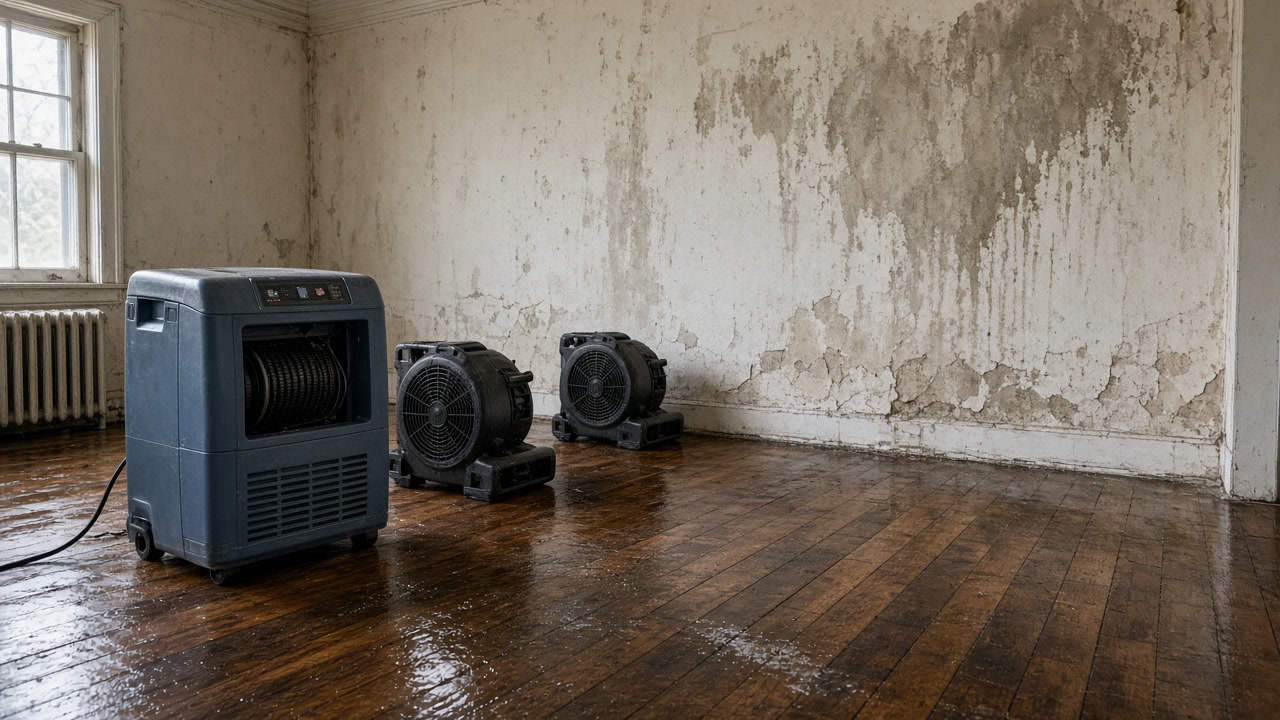
- Air movers and dehumidifiers sized to the room, with the drying run monitored on readings rather than on how many days the equipment has been sitting there
- Moisture mapping of walls, subfloors and framing, so the wet area is defined at the start and proved dry at the end
- Controlled drilling or partial baseboard removal to get air into a closed cavity, used instead of a full tear out where the material can genuinely be saved
- A contamination call made on evidence: whether the water came from a supply line, off the roof, through the facade, or up a floor drain out of the combined system
- Basement drying in the two modes this city actually needs, hillside seepage through a foundation wall on the ridge and slab or floor drain water on the low ground
- Summer humidity control, which is a different job from drying a spill and is the more common one from June through September here
- A dated record of the readings and the equipment run, which is what an insurer, a landlord or an association asks for afterwards
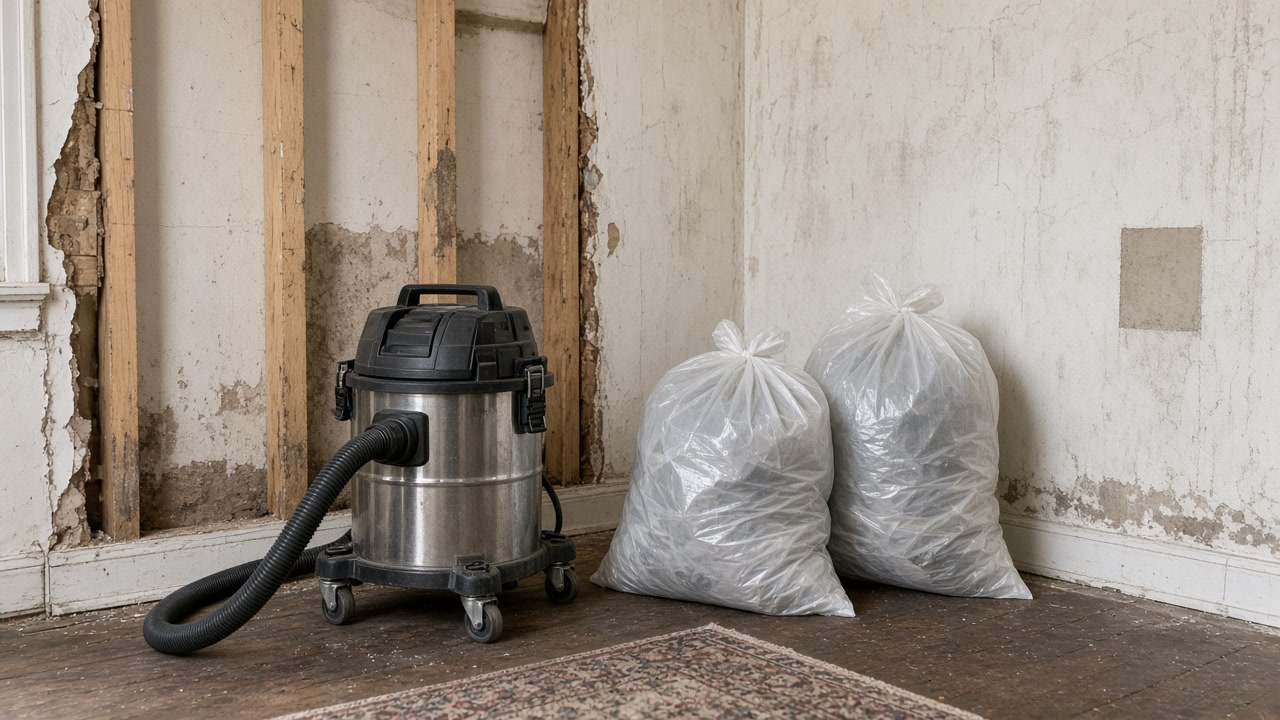
What sets the drying plan in a Jersey City basement
Two wet basements on the same street can need opposite responses. What moves it is how long it has been wet, which direction the water came from, what the material is, and what the weather was doing when it happened.
How long it has been wet
The EPA window is roughly 24 to 48 hours, and in most cases mold will not grow if wet materials are dried inside it. Past that, the conversation turns from drying to removal, and that is the largest cost fork in this trade. The clock started when the water arrived, not when somebody called back.
Which way the water arrived
Twenty two active combined sewer outfalls sit in Jersey City, and the pressure that discharges through them pushes water back up basement floor drains nearby. The JCMUA has put the Bates Street area in writing as a place where CSO flooding reaches streets and buildings. If that was the route, drying porous material in place is not on the table.
Whether the water was genuinely contaminated
Not every flood is the worst case. The standards body said in January 2026 that top down ingress and weather related water are not automatically Category 3, and that the restorer must inspect and gather information before making the determination. Hearing that call justified is your protection against a scope that is bigger than the event.
What the weather actually did
Most Jersey City flood claims are rain rather than tide: 1,015 for accumulation of rainfall or snowmelt against 357 for tidal overflow. A basement that took water on a dry high tide day was filled by the sky or the sewer, and that is a different repair and a different insurance conversation from a surge.
Where the property sits on the hill
Runoff on the ridge arrives sideways through a wall and keeps arriving for days after the rain stops. Water on the low ground arrives fast and can be gone before anyone sees it, leaving a soaked cavity behind an intact finish. Elevations here run from 156.8 feet at Pershing Field to 6.2 feet at Exchange Place, and the drying plan is not the same at the two ends.
What time of year it is
The mean July dew point at Newark Liberty is 63.3 degrees and the mean July overnight low is 68.7, so opening basement windows to dry a room in summer brings in more water than it takes out. Drying here between June and September is a closed room and a dehumidifier, and it is the thing homeowners most often get backwards.
What the wet material is
Concrete, masonry and solid timber give water back slowly and can usually be saved. Carpet, pad, ceiling tile and the lower band of drywall often cannot, and the EPA says porous material may simply have to be thrown away because mold fills the crevices and cannot be removed completely.
Whether the source is actually closed
A drying run against a live leak is equipment rental. The JCMUA lists stormwater pumps at two of its outfall and netting sites as complete and three more as still in progress and still needing funding and engineering, so on plenty of streets the protection that exists today is the protection at your own property line.
Still wet, or already drying out on its own?
Say when it happened and how the water got in. That is enough to tell you whether this still needs equipment, and there is no obligation in asking.
What happens on day one, and what you can do before anyone arrives
Call rather than type if water is arriving now
The clock is the whole story on the first day, and phones are answered 24/7. A form is the right tool for a stain and the wrong tool for a running leak.
Stop the source, or isolate it
Water off at the valve, the drain covered, the gutter diverted away from the wall. Nothing else is worth starting while the room is still filling.
Get contents out and standing water off the floor
Wet contents keep feeding the room and they wick water into dry material next to them. Moving them is the useful thing you can do before anyone arrives.
Establish where the water came from
Supply line, roof, facade, window head, ground or floor drain. This is the decision that sets whether material is dried or removed, and it is made on what the site shows rather than on the worst available assumption.
Map the wet area
Meter readings on walls, subfloor and framing set the boundary of the job at the start. The same readings are what tell you the job is finished, which is why they are taken before any equipment is placed.
Dry with equipment sized to the room
Air movement plus dehumidification in a closed room. In a Jersey City summer, opening the windows works against you, because the outside air is carrying more water than the air you are trying to dry.
Keep taking readings until the material is dry
Drying finishes on a number rather than on a date, and the record of those numbers is what an insurer, a landlord or an association asks for afterwards.
Say honestly what could not be saved
If porous material stayed wet too long, or the water came out of a sewer, it comes out, and the job hands over to a removal scope with the reason written down rather than assumed.
Water Damage Drying work we have arranged
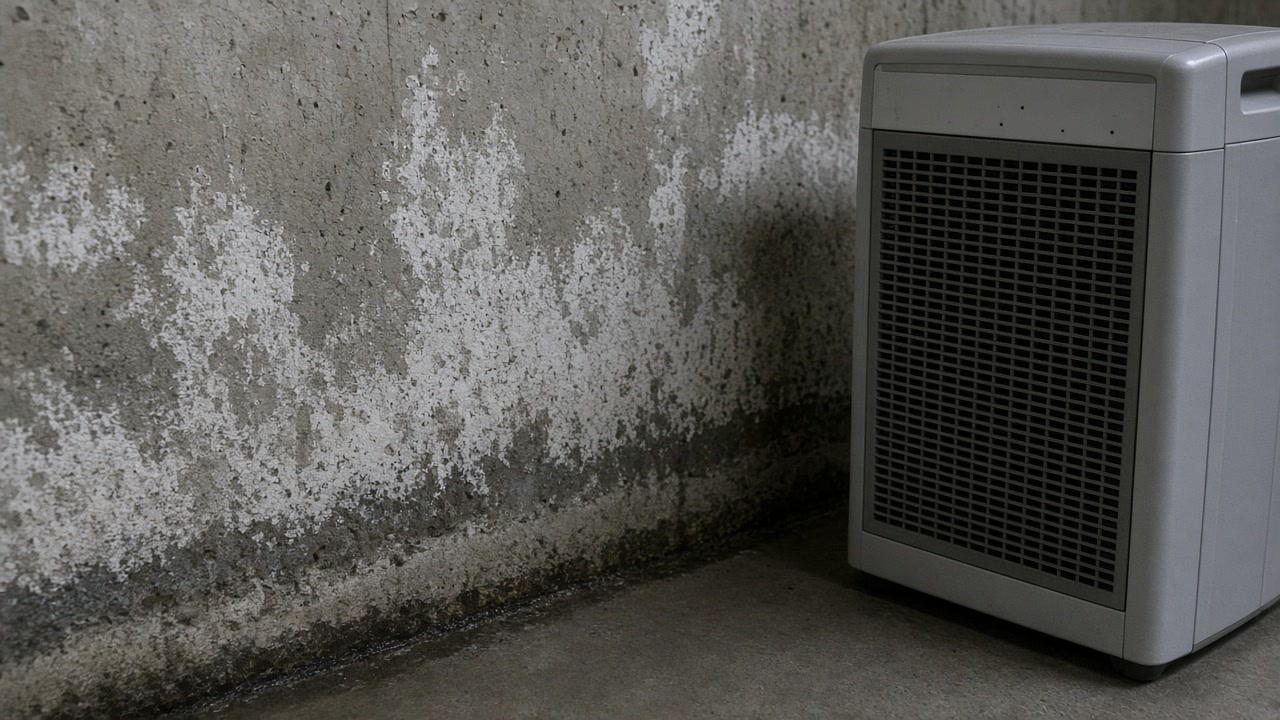
What water damage drying looks like
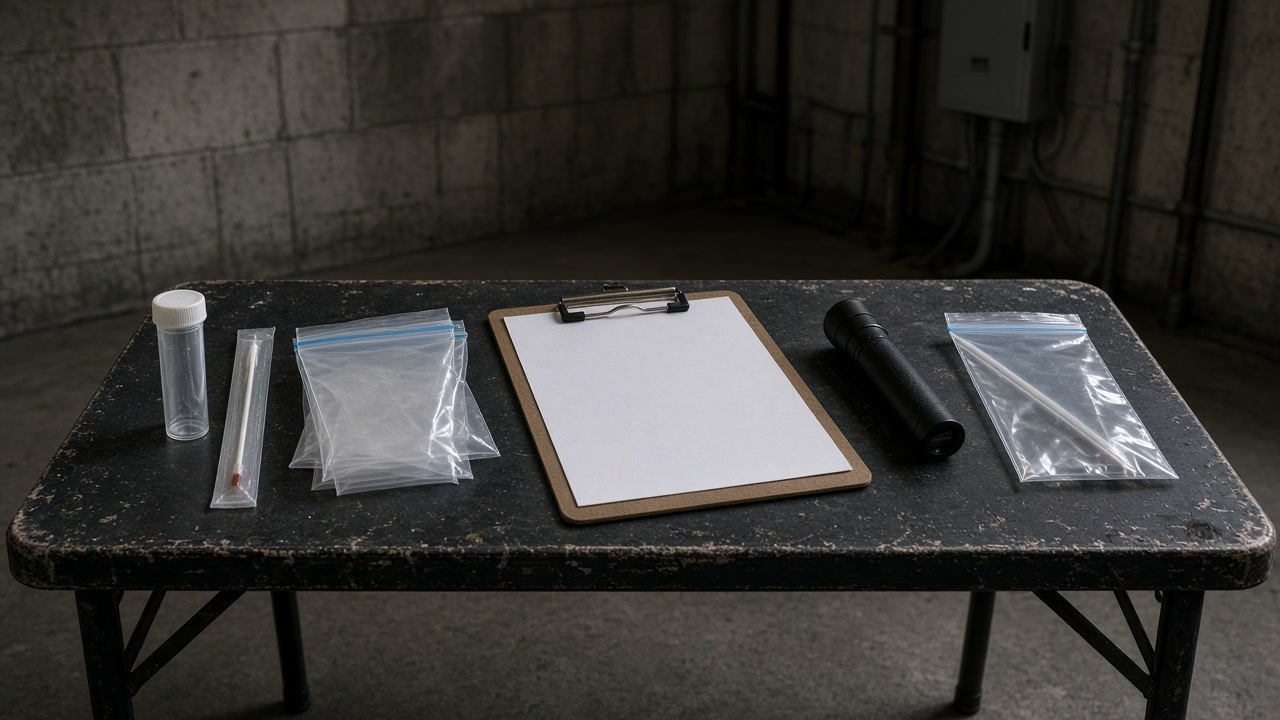
What drying does not cover, and when to skip the equipment
When you may not need this at all
- If it has been dry for weeks and all that is left is a stain and a smell, drying equipment is not what you need. That is an inspection question about where the water came from and whether anything behind the finish stayed wet.
- A clean water spill caught within hours, on a hard floor, in a room you can close up and dehumidify, is often something you can handle yourself. The window is roughly 24 to 48 hours and a rented dehumidifier inside it is genuinely enough for a small area.
- If the room is damp every summer but has never taken a flood, that is humidity and not water damage. The July dew point normal at Newark Liberty is 63.3 degrees, which is above the temperature of most basement surfaces in this city, and that is the entire mechanism.
- If sewage came up the drain, do not try to dry it in place and do not sleep in the room. That is a removal scope from the first hour, because the state's guidance is that water carrying sewage requires additional steps to assess, clean and decontaminate.
- If you rent, the building is the landlord's responsibility. Give written notice of the water source and keep the date, because every tenant remedy in New Jersey is built on notice first and a reasonable chance to repair.
- If this was the September 2021 rainfall, take a breath before spending. Newark recorded 8.41 inches in a day and 3.24 inches in an hour, both all time records, and no combined sewer in this county was built for that. A basement that only floods in a 500 year storm is a different problem from one that floods in an ordinary heavy rain.
What is out of scope
- Mold removal. Once growth is established, that is a separate scope arranged with a separate company.
- Plumbing, roofing and facade repair. The source is isolated so drying can start, and the permanent repair is its own trade and its own contract.
- Sewer main work and anything on the public side of the connection. The JCMUA holds those lines, and which authority holds the permit decides who you are talking to.
- Contents restoration and the cleaning of soft furnishings, which specialist facilities handle off site.
- Flood insurance advice. Jersey City carries 1,122 flood policies against 135,231 housing units, so most damage here is paid out of pocket, but whether yours should be insured is a conversation for a broker.
- Any suggestion that a building will not take water again. There is still no accepted long term control plan for the city's overflows, so the honest position is protection at your own property line.
- Health advice. Symptoms are for a doctor, and the drying crew is there for the building.
Where we arrange water damage drying around Jersey City
Questions people ask while the floor is still wet
How fast do I have to act?
The EPA says it is important to dry water damaged areas and items within 24 to 48 hours, and that in most cases mold will not grow if wet materials are dried inside that window. The practical version is that the first day is worth more than the next five. Move contents out, get air moving, and call while it is still a drying job.
It rose out of the floor drain, which points at the sewer rather than at a pipe. Is it dirty?
Treat it as contaminated. The JCMUA states on its own stormwater page that Jersey City operates a combined sewer system where stormwater and wastewater share one line, and that the line becomes inundated and sometimes overflows in heavy rainfall. Water arriving that way has been mixed with sewage in the street, and the state's guidance is that sewage means extra steps to assess, clean and decontaminate rather than drying in place.
Can everything be dried, or does the drywall come out?
Hard, dense materials usually dry and stay. Porous ones often do not: the EPA says absorbent materials such as ceiling tiles and carpet may have to be thrown away because mold can fill the crevices and be impossible to remove completely. Where the water was clean and caught quickly, a partial removal at the base of a wall can be enough to get air into the cavity and save the rest.
My basement floods in heavy rain and I am not in the flood zone. Why?
Because the FEMA map is not drawn for the thing that floods most Jersey City basements. 201 city flood claims, about 4.9 million dollars worth, were on policies rated in zones outside the mapped special flood hazard area, and the city's own hazard annex states it does not have updated data showing where pluvial and combined sewer flooding happens. Your block's history and your neighbors' experience are the strongest evidence available.
Should I open the windows to dry the basement out?
In summer, no, and this is the most common thing people here get backwards. The July mean dew point at Newark Liberty is 63.3 degrees and the mean overnight low is 68.7, so warm humid night air entering a cool basement deposits water on every surface below that dew point. Close the room and run a dehumidifier instead.
Will the city fix the sewer so this stops happening?
Not on a date anyone can give you. The long term control plan for these overflows is under review and has not been accepted, and the JCMUA's own annex lists three of its stormwater pump projects as still in progress and still requiring funding, land acquisition and engineering drawings. Two are complete. Plan the protection at your own property line rather than around a timetable that does not exist yet.
Tell us when it got wet
Two sentences will do: when, where it came from, and what is still damp. Phones are answered 24/7.