Hudson County
Mold Removal in Jersey City: Three Water Problems, One Hill
Tell us the street and what you can see, and we will tell you which of Jersey City's three water problems you have before anyone puts a scope on paper. The record here is that blunt: ZIP code 07302 on the Downtown waterfront has 1,097 flood insurance claims and about 31.5 million dollars paid since 1978, while 07307 in the Heights has 8 claims and 44,593 dollars in the whole record.
Request a quote in Jersey City
Tell us the street or the neighborhood, what you can see or smell, and whether the water came up through the floor or in through a wall. In this city those two answers point at different trades, different costs and often a different person who should be paying.
Would you rather talk it through? Call (315) 640-3590, answered 24/7.
$100 off your first job
Credited by us on your first booked job.
- One credit per customer per property, on your first booked job.
- Valid through December 31, 2026.
Mention this offer when you book. Full terms.
What 1,822 Jersey City flood claims tell an assessor
Sorting the Jersey City flood claims by reported ZIP code gives 1,097 claims and about 31.5 million dollars paid in 07302 on the Downtown waterfront, against 8 claims and 44,593 dollars paid in 07307 in the Heights, across the entire record since 1978.
Source: Federal Emergency Management Agency, OpenFEMA FIMA NFIP Redacted Claims dataset v2, accessed 2026-09-21
USGS elevation point queries taken across Jersey City return 156.8 feet at Pershing Field in the Heights and 6.2 feet at Exchange Place on the waterfront. The two points are about 2.5 miles apart inside the same city.
Source: US Geological Survey, 3D Elevation Program point query service, accessed 2026-09-21
The middle Jersey City ZIP codes fall between the two extremes: 07305 in Greenville has 341 claims and about 10.6 million dollars paid, 07304 has 214 claims and about 5.1 million, 07306 around Journal Square has 74 claims and about 1.0 million, and 07310 at Newport has 55 claims and about 4.6 million.
Source: Federal Emergency Management Agency, OpenFEMA FIMA NFIP Redacted Claims dataset v2, accessed 2026-09-21
The FEMA NFIP claims dataset holds 1,822 paid and unpaid flood insurance claims filed in Jersey City, community number 340223, between May 1978 and April 2026. Of these, 1,357 resulted in a payment and the total paid on building and contents came to about 54.5 million dollars.
Source: Federal Emergency Management Agency, OpenFEMA FIMA NFIP Redacted Claims dataset v2, accessed 2026-09-21
Coding the Jersey City claims by cause of damage gives 1,015 claims for accumulation of rainfall or snowmelt against 357 for tidal water overflow and 310 for stream, river or lake overflow. Rainfall is the single largest cause by count, at about 56 percent of all claims.
Source: Federal Emergency Management Agency, OpenFEMA FIMA NFIP Redacted Claims dataset v2, accessed 2026-09-21
The NJDEP combined sewer outfall inventory lists 22 active outfalls in Jersey City. Twenty one are permitted to the Jersey City Municipal Utilities Authority and discharge through the Passaic Valley Sewerage Commissioners system. The twenty second belongs to the North Hudson Sewerage Authority Adams Street plant and sits at Observer Highway and Court Street on the Hoboken line.
Source: New Jersey Department of Environmental Protection, combined sewer outfall inventory served through the NJDEP ArcGIS mapping service, accessed 2026-09-21
The JCMUA states on its own stormwater page that Jersey City operates on a combined sewer system, that stormwater and wastewater share one line, and that during heavy rainfall the line becomes inundated and sometimes overflows. It counts 21 CSO discharge points of its own.
Source: Jersey City Municipal Utilities Authority, accessed 2026-09-21
The 22 Jersey City outfalls do not drain to one place. Ten discharge to the Hudson River, eight to the Hackensack River, two to Newark Bay at Danforth Avenue and Mina Drive, and two to an unnamed tributary of Penhorn Creek at Secaucus Road and Manhattan Avenue.
Source: New Jersey Department of Environmental Protection, combined sewer outfall inventory served through the NJDEP ArcGIS mapping service, accessed 2026-09-21
October 1, 2020 was the submission deadline for all New Jersey combined sewer overflow Long Term Control Plans. The public information site run jointly by the Jersey City MUA and the other Passaic Valley and North Bergen permittees states that the current Long Term Control Plan is under review by NJDEP and, to date, has not been accepted.
Source: Clean Waterways, Healthy Neighborhoods, the joint public information program of the PVSC and NBMUA combined sewer permittees including the Jersey City MUA, accessed 2026-09-21
The Jersey City Division of Housing Preservation enforces the Rent Control Ordinance through its Office of Landlord Tenant Relations, maintains the registries of vacant, foreclosed and short term rental properties, and conducts lead based paint inspections in rental dwellings under municipal Ordinance 23-018 and P.L. 2021 chapter 182.
Source: City of Jersey City, Division of Housing Preservation, accessed 2026-09-21
The Jersey City Division of the Construction Code Official registers non state licensed contractors, and the city states that a Jersey City contractor license is required for all non state licensed contractors and for all work done on a commercial property.
Source: City of Jersey City, Division of the Construction Code Official, accessed 2026-09-21
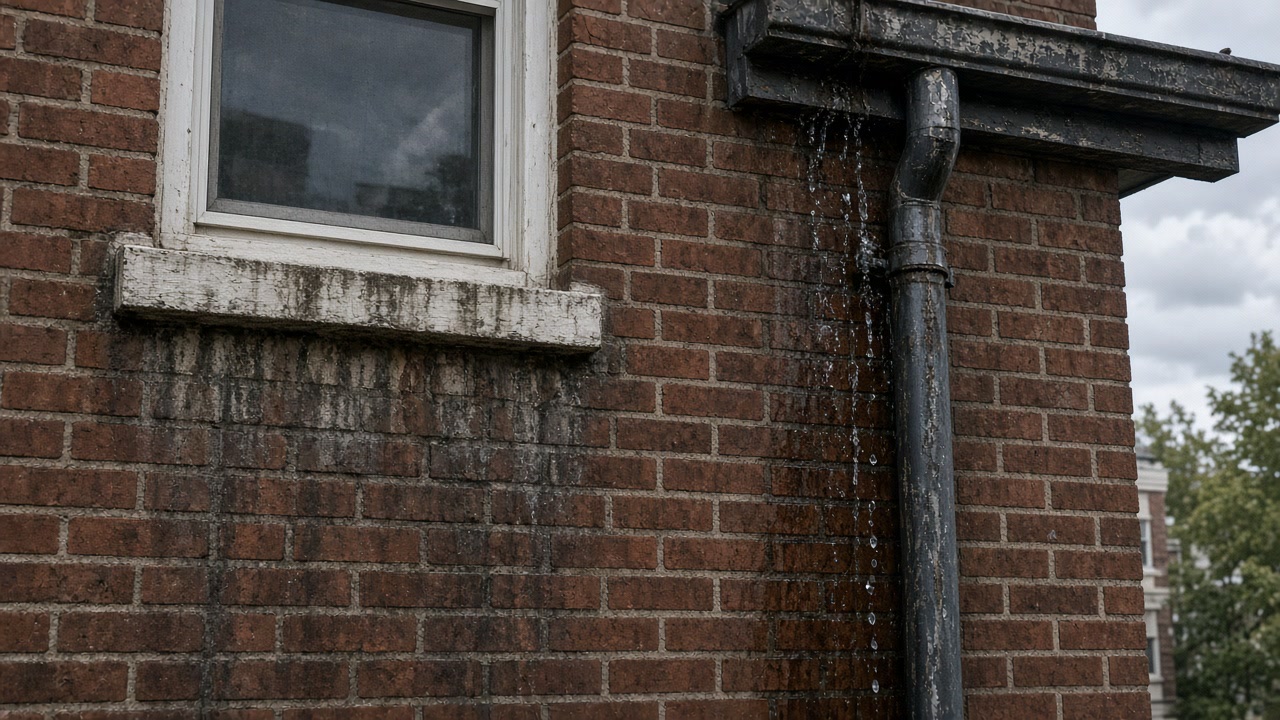
Jersey City publishes its own ordinary maintenance list of work needing no permit in any structure. It includes interior and exterior painting, wall covering, the repair or replacement of any flooring material with a new material, the repair, replacement or installation of interior trim and moldings, the installation of insulation other than foam plastic, and the repair, replacement or installation of exterior gutters and leaders.
Source: City of Jersey City, Division of the Construction Code Official, accessed 2026-09-21
Of 125,223 occupied Jersey City housing units, 90,256, or 72.1 percent, are renter occupied. Across Hudson County the figure is 69.3 percent.
Source: US Census Bureau, American Community Survey 2020-2024 five year estimates, accessed 2026-09-21
The New Jersey Condominium Act defines common elements to include, as to any improvement, the foundations, structural and bearing parts, supports, main walls, roofs, basements, halls, corridors, lobbies, stairways, elevators, entrances and exits, excluding anything specifically reserved or limited to a particular unit. Limited common elements are those common elements reserved for the use of one or more specified units.
Source: New Jersey Legislature, reproducing N.J.S.A. 46:8B-3 in Senate bill S1013 of the 221st Legislature, accessed 2026-09-21
Jersey City's Office of Landlord Tenant Relations administers Chapter 260 of the municipal code and states on the city's own page that all properties of one to four units are exempt from rent control. Rent control status for a specific address is checked through a request to the city.
Source: City of Jersey City, Division of Housing Preservation, Office of Landlord Tenant Relations, accessed 2026-09-21
Which of the three is your block?
Give us the street and the floor you are on. We will name the likely water path before anyone talks about scope, which is how you tell a sound quote from a sales pitch.
Which Jersey City office to call, and which pipe is yours
Two city offices handle the two halves of a damp problem here, and sending it to the wrong one is the usual reason nothing happens. The Division of Housing Preservation runs the Office of Landlord Tenant Relations and the rental registries, while the Division of the Construction Code Official handles the building itself and registers every non state licensed contractor working in the city. Mold work is not a state licensed trade, so that registration is the thing to ask a company for, not just a state home improvement license. On the repair side the city publishes its own ordinary maintenance list, and painting, wall covering, replacing flooring, interior trim, insulation other than foam plastic, and gutters and leaders all need no permit at all. On a Heights hillside new leaders are often the highest value moisture repair available and nothing is holding it up. Ownership decides the rest. About 72 percent of Jersey City households rent, so for most people the first move is a dated written notice of the water source rather than a contractor. In a condominium the New Jersey Condominium Act puts foundations, main walls, roofs and basements among the common elements, which means the wet wall is usually the association's to open and paying to do it yourself can cost you the claim. Rent control is worth checking too, because properties of one to four units are exempt from it and a substantial moisture repair in a controlled building turns into a capital improvement argument later.
Areas within Jersey City: The Heights, Downtown, Paulus Hook, Exchange Place, Newport, Journal Square, Bergen Hill, The West Side, Marion, Greenville
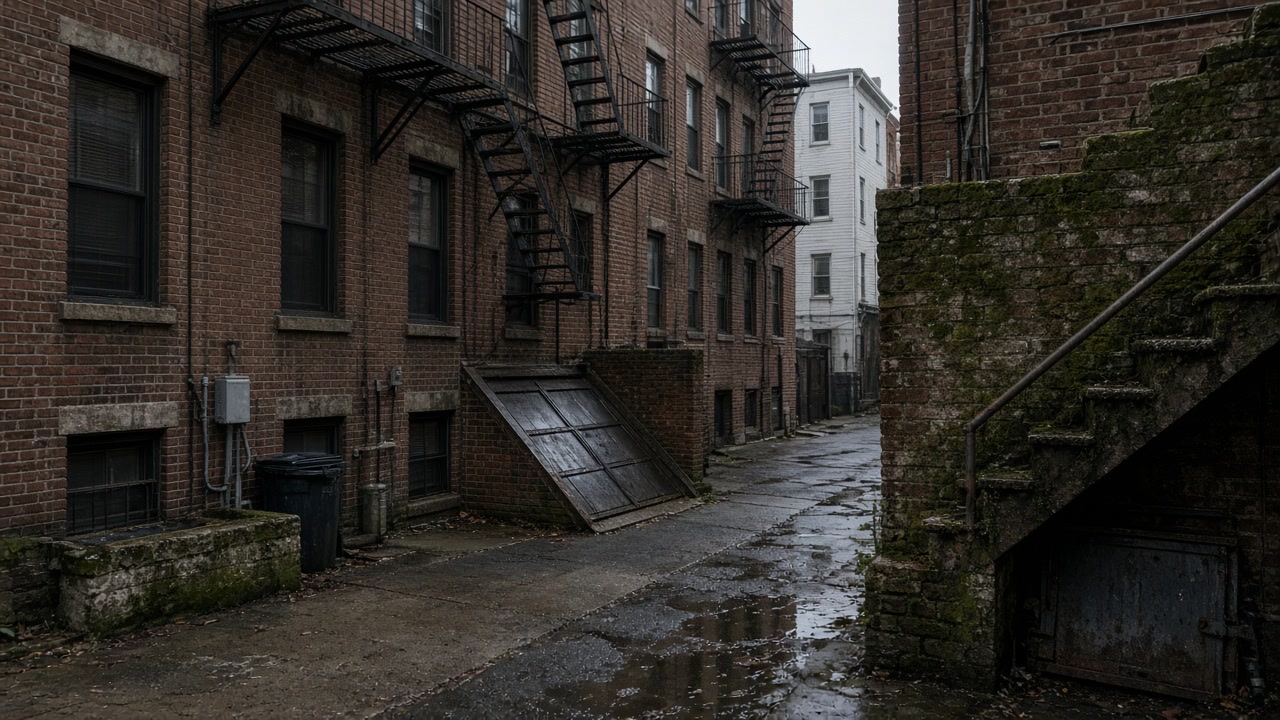
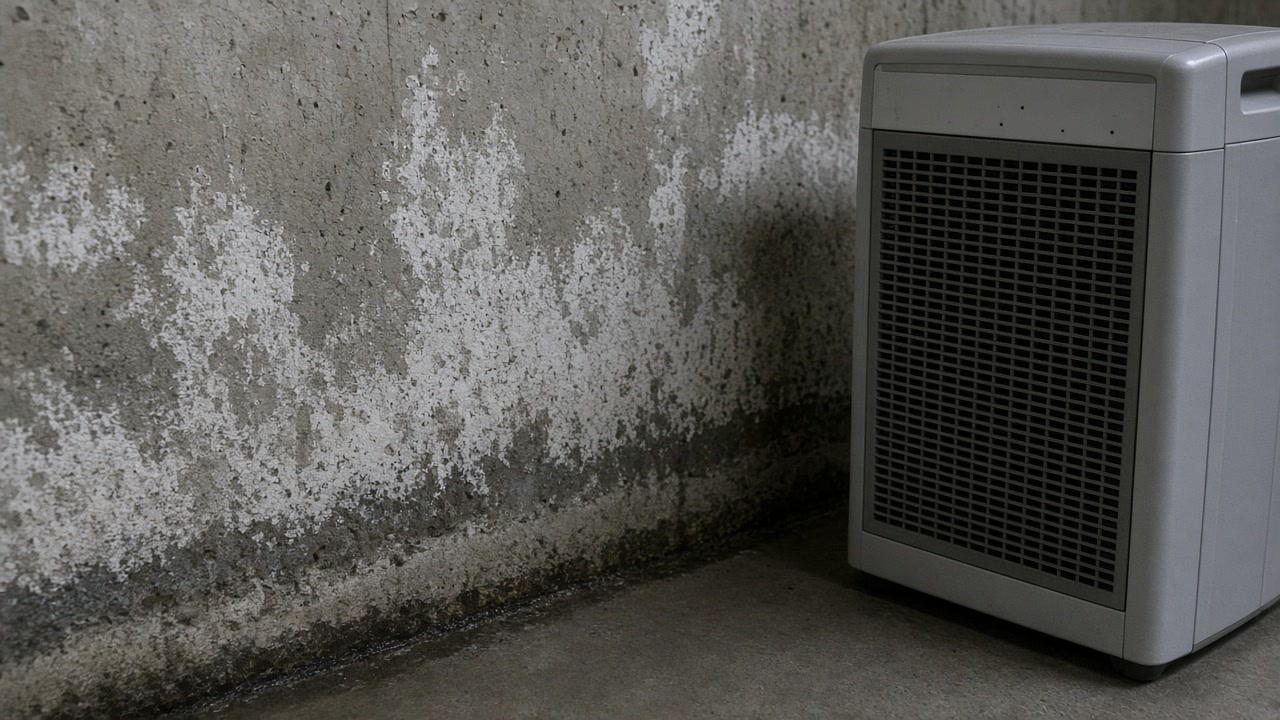
From the Heights to Exchange Place, what we arrange
Mold Inspection and Testing
Find out what is actually growing, what water is feeding it and how far it runs, in a written report from a company that is not quoting for the removal.
Mold Inspection in Jersey City →Mold Remediation and Removal
Get the mold and the material holding it out of the building, with the water route closed first and the scope set by where the water came from rather than by the size of the stain.
Mold Removal in Jersey City →Water Damage Drying
Get the water out and the structure dry fast enough that mold never starts, and find out on day one whether what came in can lawfully be dried in place at all.
Water Damage Drying in Jersey City →Send the address, take the diagnosis first
Tell us what you can see and what you can smell. If it turns out small enough to handle yourself, we will say so. Phones answered 24/7, no obligation.