Jersey City and the surrounding Hudson County area
Mold Inspection and Testing in Jersey City, Ridge to Waterfront
Find out what is actually growing, what water is feeding it and how far it runs, in a written report from a company that is not quoting for the removal.
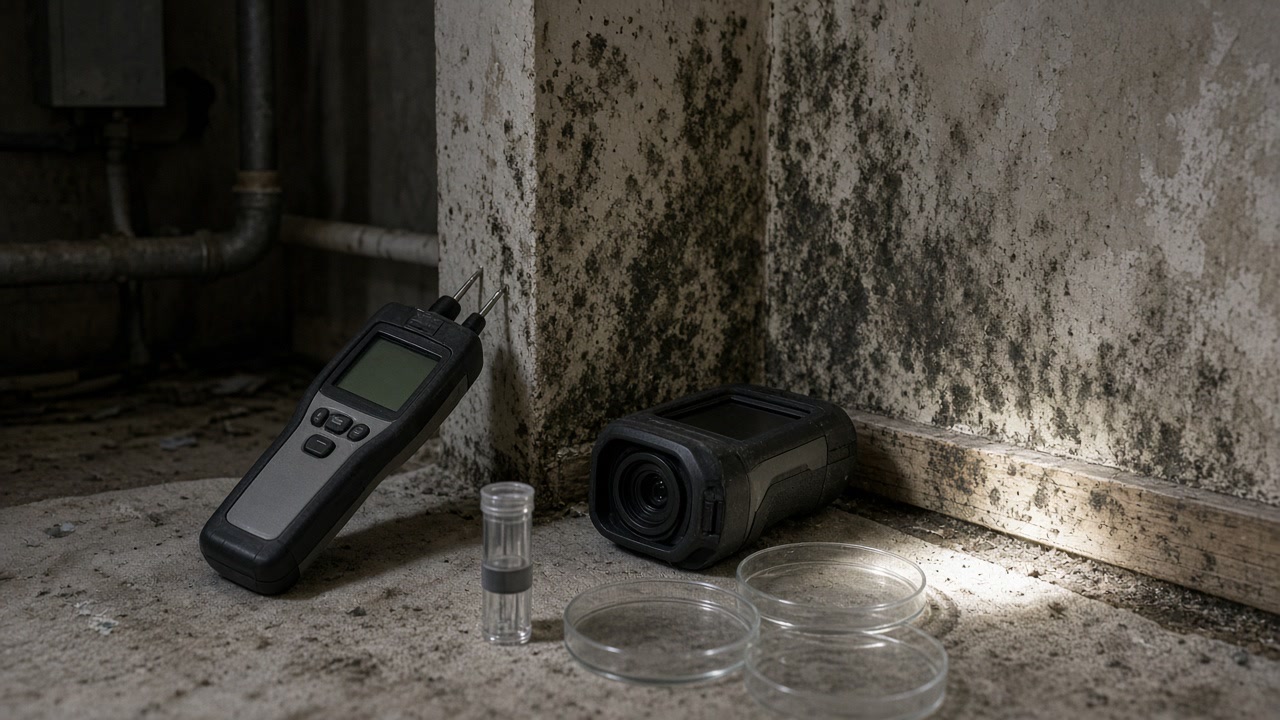
Mold Inspection quote
Tell us the street or the neighborhood, what you can see or smell, and who is going to have to read the report. Those three answers are usually enough to say whether an inspection is the right first spend or whether something cheaper will do.
Would you rather talk it through? Call (315) 640-3590, answered 24/7.
$100 off your first job
Credited by us on your first booked job.
- One credit per customer per property, on your first booked job.
- Valid through December 31, 2026.
Mention this offer when you book. Full terms.
What you get, and why the company writing it is not the one removing it
What you get is a written finding you can act on and hand to somebody else: the rooms affected, the material that is wet, the route the water is taking, and what has to change to stop it. It comes from a company that is not bidding on the removal, which is the entire design. In Jersey City that finding is worth more than it would be in a flat town, because the answer moves with your address. One Downtown ZIP code has filed 1,097 flood insurance claims since 1978 and about 31.5 million dollars has been paid on them, while a ZIP code up in the Heights has filed eight over the same record, for 44,593 dollars. Same city, opposite water problems. An inspection tells you which of the two you are living with before anyone sells you a scope, and it tells you plainly when what you are looking at is condensation, a cleaning job, or nothing that needs a contractor at all.
- A room by room walkthrough of the affected space, the basement or ground floor and any shared or party wall, with the growth, the staining and the musty smell recorded where each one is found
- Moisture readings in wall cavities, subfloors and framing, taken with meters and where it helps a thermal camera, so wet material behind an intact finish is found without opening the finish first
- A water route finding: whether the moisture came up through the slab or a floor drain, sideways through a foundation or retaining wall, down from a roof, facade or window head, out of a pipe, or out of the summer air onto a cold surface
- Elevation and drainage context for the specific address, because a Heights hillside, a Downtown slab close to tidewater and a lot on the Hackensack side of the ridge each fail in their own way
- Air and surface sampling where there is a reason for it: growth suspected behind a finish, a dispute that needs a number on paper, or a comparison between an affected room and an unaffected one
- Post remediation verification after another company has done the removal, checking that the containment held, the material came out and the readings came back down
- The written report the state describes: the areas inspected, the cause of the growth, how to take care of the problem, and any sampling results, in one document
- A report addressed to whoever has to read it next, whether that is a landlord, a management company, a condominium board, an adjuster, a buyer or a city inspector
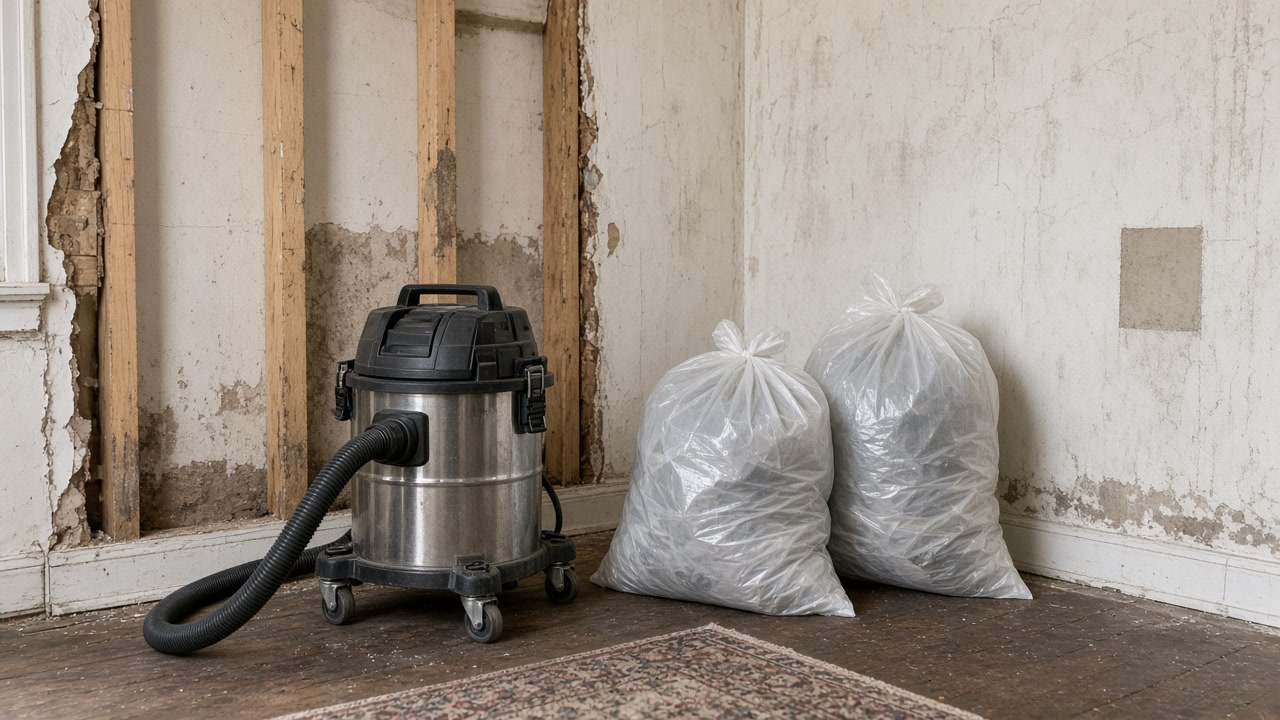
What 150 feet of elevation changes about an inspection
Two Jersey City basements with the same dark patch can need completely different visits. What moves it is where the property sits on the hill, the route the water took to get in, and who is allowed to open the wall it came through.
Which side of the ridge the property sits on
USGS puts Pershing Field in the Heights at 156.8 feet and Exchange Place on the waterfront at 6.2 feet, two and a half miles apart inside one city. A hillside basement takes runoff through a wall and a waterfront basement takes water up a drain, so the readings worth taking are not the same in the two places.
Whether the water came out of a sewer
Twenty two active combined sewer outfalls are spread across Jersey City, and the pressure that discharges through them pushes water back up basement floor drains nearby. If that was the route, the report has to say so: the state's own guidance is that water carrying sewage requires additional steps to assess, clean and decontaminate.
Whether you are allowed to open the wall
About 72 percent of occupied Jersey City homes are rented, and in a condominium the foundations, main walls, roofs and basements are common elements belonging to the association. The person who finds the mold is frequently not the person who can authorize opening the wall, so the report has to be written for the one who can.
How old the building is
The median housing unit in the Heights ZIP code was built in 1952 and the median unit at Newport in 2005. Old masonry leaks through joints worked open by 82 freeze days a year, while a sealed newer envelope sweats behind the finish, and an inspection looks in different places for each.
Whether anything is still wet
Wet material can begin growing inside roughly a day to two days, which is the window this whole service is built around. If the source is still running, the visit that earns its money is the one that finds and stops the water, and the state booklet is blunt about the order: a plan to stop the intrusion first, a plan to clean up second.
How much of it there is
There is a size test before you spend anything. The Department of Health treats under about 10 square feet as often within reach of a homeowner or building maintenance staff, over about 100 square feet as work for a contractor experienced in this field, and the space in between as where a professional opinion is worth buying. Measuring it is the first thing that happens.
Whether it is a high rise
29.3 percent of Jersey City housing units sit in buildings of fifty or more, and around Newport that reaches 91 percent. Thirty floors up the water is coming from the envelope, a window head or the mechanical system rather than the ground, and the access needed to prove it runs through an association that has a statutory right of entry for common element repairs.
Who has to read the report
A landlord, a board, an adjuster, a buyer and a code officer each want something different out of the same visit. Naming the reader beforehand is what makes the four parts of the written report land, and it is why a renter's report leads with the unrepaired water source the code office can actually act on.
Not sure you need a test at all?
Describe what you can see and say roughly where the property sits. If a sample would change nothing, we will tell you that, and there is no obligation either way.
From the first call to the document in your hand
Tell us what you are looking at, and where
The street or the neighborhood, what you can see or smell, and whether water came up through the floor or in through a wall. In this city those two answers point at different trades, different costs and often a different person who should be paying.
Agree who the report is addressed to
You, a landlord, a management company, an association, an insurer or a housing inspector. Mention it when you book, not on the doorstep. It changes what gets photographed and measured, and a report written for the wrong reader gets ignored by the right one.
Walk the whole water path, not just the stain
The visible patch is the end of the story. The visit follows it back to the grade outside, the gutters and leaders, the foundation joints, the floor drain, the window heads and the pipe runs, because the growth is the symptom and the water route is the defect.
Take the readings
Moisture meters on wall, framing and subfloor, relative humidity and surface temperature in the room, and a thermal scan where it saves opening a finish. This is the step where a condensation problem separates itself from a leak.
Sample only where a sample changes something
The EPA says sampling is usually unnecessary where growth is visible, and that no federal limit exists for mold or spores, so a count cannot be pass or fail against a published number. If a sample is proposed here, the reason it is proposed goes in writing first.
Write it up to the state's own list
Areas inspected, the cause of the growth, how to take care of the problem, and any sampling results. New Jersey publishes no clearance certificate, so that four part description in the state's resident guidance is the nearest thing to a specification there is, and the report follows it.
Hand you a scope, not a bid
The report describes the work in enough detail that two removal companies can price the same thing. What it does not contain is our own number for doing it, because nobody who inspected the wall is bidding on the wall.
Come back and check it if you want it checked
Once another company has completed the removal, a verification visit looks at whether the containment held, the material came out and the moisture readings came back down. It is a separate engagement and it is optional.
Mold Inspection work we have arranged
What mold inspection looks like
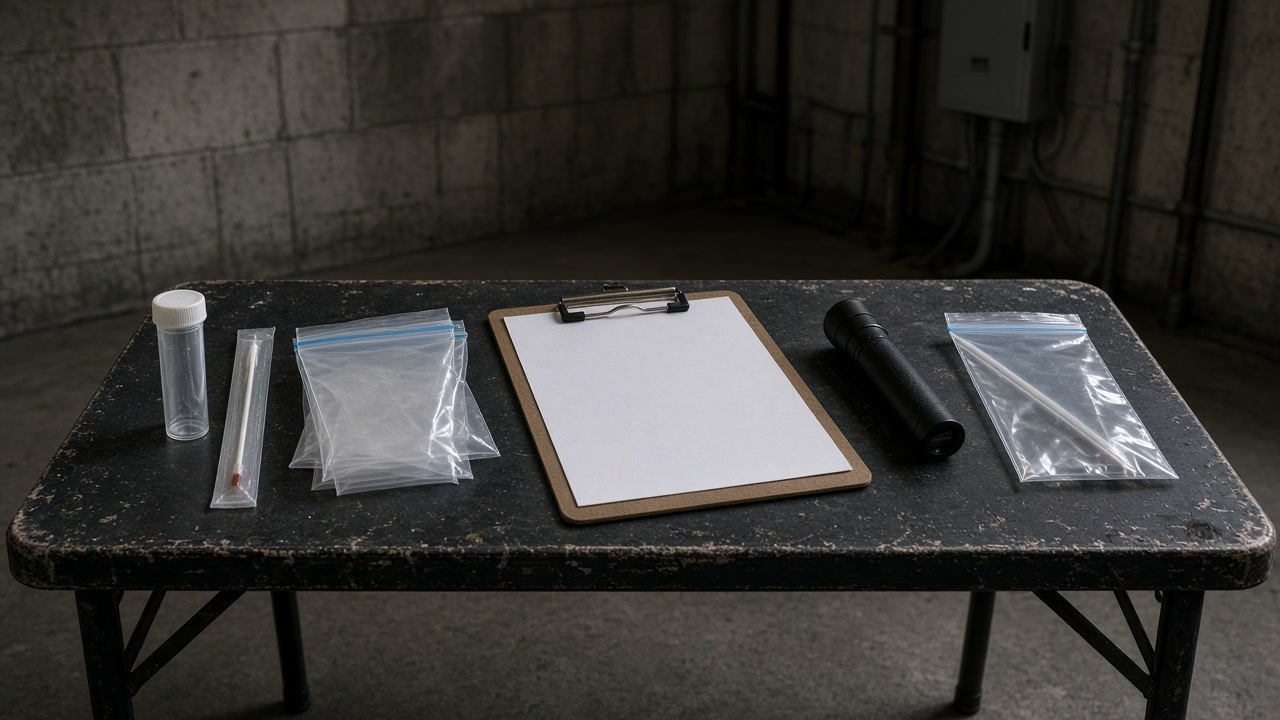
What the report does not cover, and when to keep your money
When you may not need this at all
- If you can already see the growth and you know where the water is coming from, a sample is often money spent confirming what you know. The Department of Health puts it plainly: where a visual inspection reveals mold, additional testing is not necessary, and the resources are better used correcting the moisture and cleaning up the contamination.
- A patch under about 10 square feet, roughly a yard square, sits inside what the state says a homeowner or building maintenance staff may be capable of handling. Behind a radiator or under a window, that is often a weekend, not a contract.
- Summer dampness with no leak behind it is common here and it is not a contractor problem. The mean July dew point at Newark Liberty is 63.3 degrees, so any basement surface cooler than that pulls water straight out of ordinary air. A dehumidifier holding the room in the low fifties for a couple of weeks will tell you a great deal before anybody visits.
- If you rent, the most useful first move is usually written notice to the landlord about the water source rather than an inspection. New Jersey code offices can act on an unrepaired leak and have very little authority over the growth it caused, so the complaint that actually moves is the one about the plumbing or the roof.
- If the wet element is a foundation, a main wall or a roof in a condominium, that is a common element and the association holds the repair. An independent report still helps, but it belongs in front of the board rather than paid for quietly by one unit.
- If water is arriving right now, do not book an inspection first. Get the source stopped and the material dried inside the 24 to 48 hour window the EPA describes, then assess once the picture has stopped moving.
What is out of scope
- The removal itself. That is arranged as its own engagement with a different company, which is the whole reason the inspection is bought separately.
- Plumbing, roofing, facade and drainage repair. The report names the defect and the trade it belongs to, and the repair is contracted on its own.
- A state clearance certificate. New Jersey does not issue one for mold, and no private document is a substitute for a thing the state does not have.
- A pass or fail verdict on a spore count. No federal limit has been set for mold or mold spores, so a sample cannot be measured against a standard that does not exist.
- Health advice of any kind. What is wet, how far it runs and what the building needs is the scope; symptoms belong with a doctor.
- Representation in a landlord dispute or an insurance claim. The report is evidence and it is written to be usable as evidence, and that is where it stops.
- Any opinion on whether a property is worth buying. The report describes a building defect and its cause, and the decision stays the buyer's.
Where we arrange mold inspections around Jersey City
Questions worth asking before you book an inspection
If I can already see the growth, what is a test actually going to tell me?
Usually not, and the state says so first. The Department of Health guidance for residents states that if a visual inspection reveals the presence of mold, additional testing is not necessary and resources are better used correcting the moisture problem and cleaning up. The EPA agrees that sampling is unnecessary in most cases where growth is visible. What you need is the cause found and written down, which is a different purchase from a sample.
Does New Jersey license mold inspectors?
No. The Department of Health states there are no state certification programs for companies performing mold or general indoor air and environmental health services. The one indoor environmental license the state does issue covers consultants assessing child care centers and educational facilities, not houses, condominiums or apartments. If a company here names a state mold credential, ask which one, because for a home there is none.
A company told me it is on the New Jersey Department of Health list. Is that a credential?
It means the company asked to be on a list. The notice above those lists says in capital letters that the Department does not endorse or qualify the work or services of the private companies on them. The same page carries the Department's recommendation that the company conducting your assessment should not be the company conducting the remediation, which is worth reading before you treat the listing as vetting.
What should the written report contain?
Four things, and they come from the state's own guidance for residents: a summary of all the areas inspected, the cause of the mold growth, how to take care of the problem, and any sampling results. Check each of the four is present before you pay. There is no New Jersey clearance certificate to ask for instead, so this report is the document that does that job.
Why does it matter which part of Jersey City I am in?
Because the water arrives by a different route at each end of the hill. The ground runs from 156.8 feet at Pershing Field down to 6.2 feet at Exchange Place, and the flood record follows it: 1,097 claims in the Downtown ZIP code against eight in the Heights one. Down low the usual route is up a drain from a combined sewer, up on the ridge it is sideways through an old foundation wall, and the two need different work.
Why not take the inspection a removal company offers at no charge?
Because the person writing the finding is the person who earns more when the finding is bigger. Both the Department of Health resident booklet and the header of the state's own remediation firms list tell people to avoid that arrangement. Across the Hudson, New York licenses the assessor and the remover separately and forbids one company from doing both on a property. Nothing in New Jersey makes that happen, so it has to be arranged deliberately, which is what we do.
Will you also do the removal?
No. The finding and the removal are kept in separate hands here, which is the point. We arrange the inspection with one company and, if the report says work is needed, the removal with another, and then you can have the first company check the second.
Start with the address
The neighborhood decides half of this. Send it with a line about what you are seeing, and phones are answered 24/7.