Mold in a Jersey City Rental: What a Tenant Can Actually Do
Put the water source in writing to your landlord, keep proof that you sent it, and complain about the leak rather than about the mold, because the leak is the part a New Jersey code officer has authority over. Every remedy after that, repair and deduct, a rent abatement argument, an insurance claim or a demand on a condominium association, rests on the same document: an independent written assessment from someone who is not also selling the repair.
Already know you need someone out? Call (315) 640-3590, answered 24/7.
Most people with this problem in Jersey City cannot authorize the repair
If you are renting and damp, you are the majority here, whatever the rest of the trade's websites assume. Of 125,223 occupied Jersey City housing units, 90,256, or 72.1 percent, are renter occupied, against 69.3 percent across Hudson County. That single number changes the first step. A homeowner's first move is choosing a contractor. Yours is not, because you cannot lawfully open a wall you do not own and you should not pay to fix a defect somebody else is responsible for. Your first move is evidence and notice, in that order, and both are free. Everything else in this guide is built on top of those two, and skipping them is the single most common reason a tenant with a genuine damp problem gets nowhere for a year.
Report the leak, not the mold, because the leak is what gets acted on
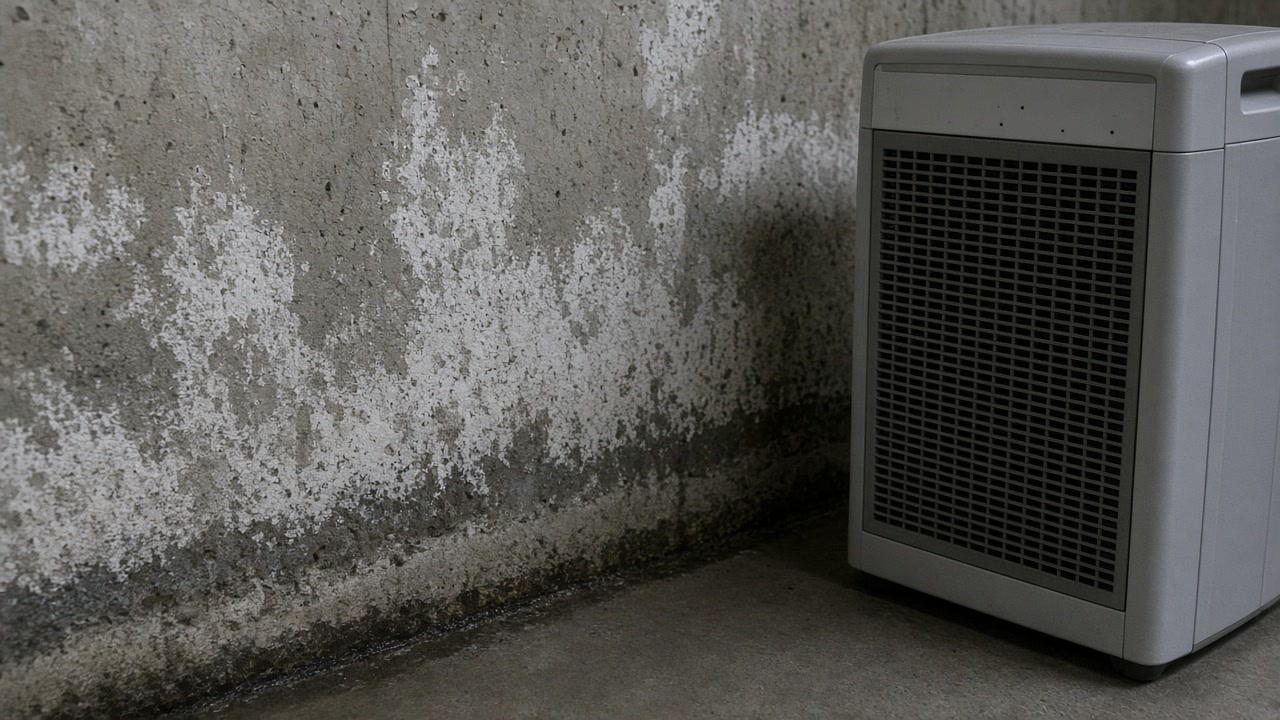
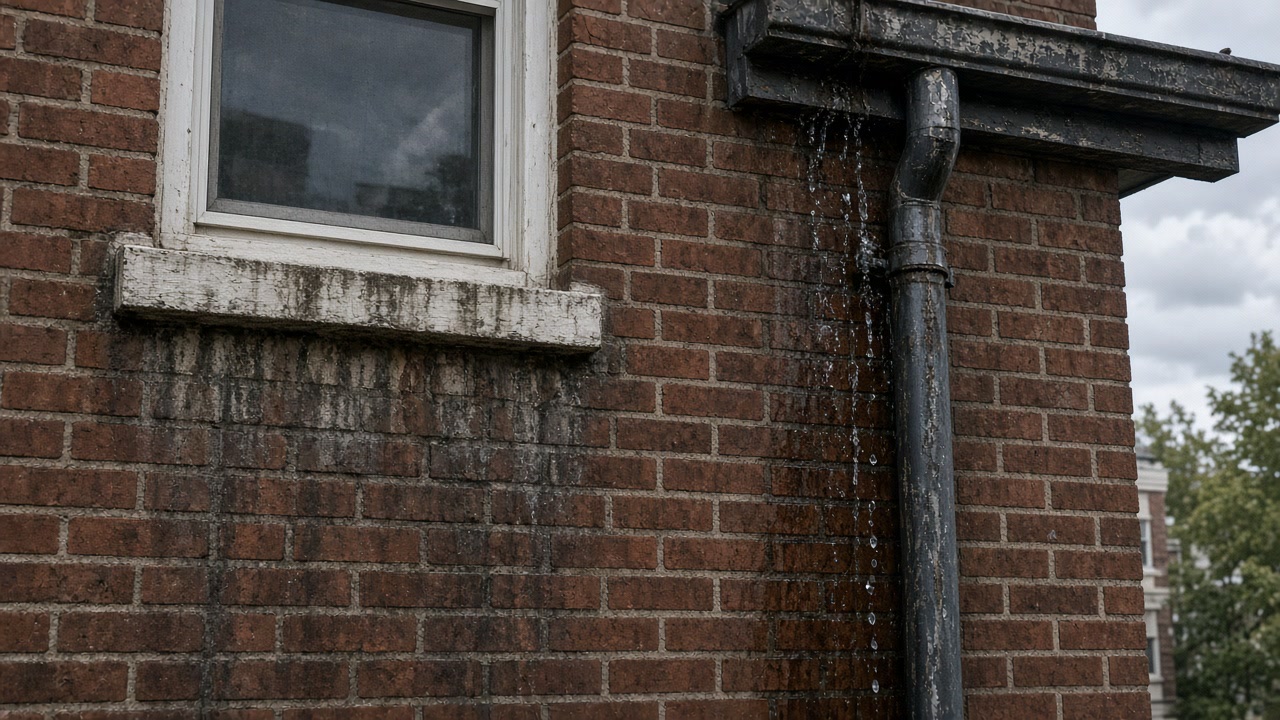
This is the most useful sentence in New Jersey tenant law and almost nobody prints it. The Department of Health tells renters directly that they often have difficulty getting mold corrected, that because of the lack of regulations government offices have little authority to cite building owners over mold contamination, and that renters should instead contact their local building code office about unrepaired building leaks, since code offices can only address structural deficiencies such as water leaks and plumbing. So the complaint that moves is the one about the roof, the failed window seal, the pipe in the ceiling or the drain that backs up. Write it as a water complaint with dates, not as a mold complaint with a photograph of black spots. Same problem, same landlord, completely different outcome, because one of the two descriptions names something an officer has power over.
Written notice first, because skipping it is what loses the argument
New Jersey courts imply a warranty of habitability into every residential lease, and under Marini v. Ireland a tenant may, after giving the landlord notice and a reasonable opportunity to repair, arrange the repair and deduct the reasonable cost from rent. The Department of Community Affairs sets this out in its own tenant publication. Read the order of operations carefully, because the remedy is fragile in exactly one place: notice comes first, then a reasonable wait, then a reasonable cost. A tenant who simply stops paying rent can be evicted for non payment even when the damp was entirely real. Note also what does not yet exist. Bills that would let a tenant pay rent into escrow or repair and deduct where a persisting serious hazard affects habitability, Senate bill S3995 and Assembly bill A5263, were both referred to committee in 2026 and neither has left it, so neither is law. Today you have the court made remedy and its notice rules, nothing looser. This is general legal information, not legal advice about your tenancy.
Which Jersey City office takes which complaint
Sending a damp complaint to the wrong desk is the usual reason nothing happens, and Jersey City splits the work across two offices. The Division of Housing Preservation enforces the Rent Control Ordinance through its Office of Landlord Tenant Relations, maintains the registries of vacant, foreclosed and short term rental properties, and conducts lead based paint inspections in rental dwellings under municipal Ordinance 23-018 and P.L. 2021 chapter 182. That is the tenancy side. The building itself, the structural defect and the unrepaired water source, belongs to the Division of the Construction Code Official. So a rent, registration or tenancy dispute goes to Housing Preservation, and a leak, a failed roof or a backing up drain goes to the construction code side. Send the water complaint to the code office, copy your landlord, and keep the reference number, because that reference is what later proves the landlord knew.
Three units is the line where a state inspector turns up on a schedule
Whether anyone inspects your building without being asked depends on how many front doors it has. New Jersey's Hotel and Multiple Dwelling Law covers buildings of three or more units, which must be registered with the Department of Community Affairs and are inspected by its Bureau of Housing Inspection on a cycle. Buildings of one and two units fall outside that state inspection system entirely. That matters here more than in most cities: 27,464 Jersey City housing units, about 20 percent of the stock, sit in two unit buildings, and in the Heights ZIP 07307 the share is 33.1 percent. If you rent a floor of a two family on the Western Slope, no state inspector is scheduled to see your apartment, ever. The only inspection that happens is one somebody asks for, which means either your complaint to the city or an assessment you commission yourself.
The flood notice your landlord signed, and the buildings exempt from it
There may already be a document in your file that decides the argument. Under P.L. 2023 chapter 93, every New Jersey landlord must give a written Flood Risk Notice before lease signing or renewal, and the state model notice asks whether the property is in the FEMA Special Flood Hazard Area or the Moderate Risk Flood Hazard Area, and asks directly whether the rental premises or its parking areas have ever experienced any flood damage, water seepage, or pooled water due to a natural flood event, and if so how many times and on what dates. Water seepage and pooled water are on the form, not just flooding, so a signed notice claiming none is a written statement that ages badly against a damp basement apartment. Find yours and keep it. Then note the exemption, because it removes a lot of Jersey City: the law does not apply to premises containing not more than two units, nor to owner occupied premises of not more than three units, nor to leases of under one month. In a two family, nobody had to tell you, so ask in writing and keep the answer.
Rent control, and why a damp repair can come back as an increase
Before you push for a large repair, find out what kind of building you are in. Jersey City's Office of Landlord Tenant Relations administers Chapter 260 of the municipal code and states on the city's own page that all properties of one to four units are exempt from rent control, with the status of a specific address checked by request to the city. That matters because a substantial moisture repair is the kind of work a landlord can later present as a capital improvement, and what can be recovered from you depends on whether your building is controlled. While you are checking, remember what is behind the landlord: since August 5, 2022 New Jersey law requires owners of rental units to carry liability insurance of at least 500,000 dollars, or at least 300,000 dollars for an owner occupied multifamily home of four or fewer units, and Jersey City has required proof of it with every annual landlord registration since February 28, 2023. If your belongings were damaged by a water failure the owner was told about and did not fix, there is a policy to point at.
If you own the condominium, the wet wall is probably not yours
Condominium owners land in the same position as tenants for a different reason: the wall is not theirs either. The New Jersey Condominium Act defines common elements to include the foundations, structural and bearing parts, supports, main walls, roofs, basements, halls, corridors, lobbies, stairways, elevators, entrances and exits, excluding anything specifically reserved or limited to a particular unit, and defines limited common elements as those reserved for the use of one or more specified units. If water is coming through a foundation, a main wall or a roof, that is the association's element to repair, and paying for it yourself can forfeit the claim. You also have a lever when the association is slow. The Act provides that the association shall have access to each unit during reasonable hours as necessary for the maintenance, repair or replacement of common elements in it or accessible from it, or for emergency repairs to prevent damage to common elements or to another unit. Neither you nor a neighbor can be blocked from having water crossing between units traced.
The patch you can clean yourself, and the point where you should not
Not every damp patch is somebody's project, and the state publishes the line. The Department of Health booklet says that for small areas of under about 10 square feet a homeowner or building maintenance staff, including staff at apartments and condominiums, may be capable of doing the work; that for areas greater than about 100 square feet a qualified contractor experienced in mold or environmental contamination cleanup should be hired; and that a professional opinion should be sought for anything between the two. Ten square feet is roughly a yard square. A patch that size behind a radiator, on a painted hard surface, where the water source is already fixed, is a weekend job with a bucket and ventilation, and nothing on this page should talk you out of it. What changes the answer is the water source: if it keeps arriving, cleaning is a chore you will repeat rather than a repair.
The one document every route on this page depends on
Notice to a landlord, a complaint to the code office, a repair and deduct argument, an insurance claim, a demand on an association: all five are stronger with the same thing attached and weak without it. A written assessment naming the rooms affected, the cause of the growth, how to take care of the problem and any sampling results is what the Department of Health says a consultant should provide, and it is the closest thing New Jersey has to a standard for the paperwork. It needs to come from someone with no stake in the repair, which is not a preference of ours but the Department's own recommendation: due to a potential conflict of interest, it strongly recommends that the company conducting your environmental health assessment not be the same company conducting the remediation. For a renter that is the whole product. You are not buying a repair you cannot authorize. You are buying a document that makes somebody else authorize theirs. Tell us the building type, the floor and what you have already put in writing, and we will tell you what an assessment would cover.
Sources used in this guide
Of 125,223 occupied Jersey City housing units, 90,256, or 72.1 percent, are renter occupied. Across Hudson County the figure is 69.3 percent.
Source: US Census Bureau, American Community Survey 2020-2024 five year estimates, accessed 2026-09-21
The Department of Health tells renters directly that they often have difficulty getting mold corrected, that because of the lack of regulations government offices have little authority to cite building owners over mold contamination, and that renters should instead contact their local building code office about unrepaired building leaks, since code offices can only address structural deficiencies such as water leaks and plumbing.
Source: New Jersey Department of Health, Consumer, Environmental and Occupational Health Service, accessed 2026-09-21
New Jersey courts imply a warranty of habitability into every residential lease, and under Marini v. Ireland a tenant may, after giving the landlord notice and a reasonable opportunity to repair, arrange the repair and deduct the reasonable cost from rent. The Department of Community Affairs sets this out in its own tenant publication.
Source: New Jersey Department of Community Affairs, Division of Codes and Standards, accessed 2026-09-21
Senate bill S3995, introduced March 19, 2026 and referred to the Senate Community and Urban Affairs Committee, would let a residential tenant pay rent into escrow or make repairs and deduct the cost from future rent where a persisting serious hazard affects habitability. Its identical Assembly bill A5263 was introduced June 15, 2026 and referred to the Assembly Housing Committee. Neither has left committee as of September 21, 2026, so neither is law.
Source: New Jersey Legislature, Senate bill S3995 as introduced, accessed 2026-09-21
The Jersey City Division of Housing Preservation enforces the Rent Control Ordinance through its Office of Landlord Tenant Relations, maintains the registries of vacant, foreclosed and short term rental properties, and conducts lead based paint inspections in rental dwellings under municipal Ordinance 23-018 and P.L. 2021 chapter 182.
Source: City of Jersey City, Division of Housing Preservation, accessed 2026-09-21
New Jersey's Hotel and Multiple Dwelling Law covers buildings of three or more units, which must be registered with the Department of Community Affairs and are inspected by its Bureau of Housing Inspection on a cycle. Buildings of one and two units fall outside that state inspection system.
Source: New Jersey Department of Community Affairs, Bureau of Housing Inspection, accessed 2026-09-21
27,464 Jersey City housing units, about 20 percent of the stock, sit in two unit buildings. In ZIP code 07307 in the Heights the share is higher: 6,371 of 19,260 units, or 33.1 percent.
Source: US Census Bureau, American Community Survey 2020-2024 five year estimates, accessed 2026-09-21
Under P.L. 2023 chapter 93, every New Jersey landlord must give a written Flood Risk Notice before lease signing or renewal. The state model notice asks whether the property is in the FEMA Special Flood Hazard Area or the Moderate Risk Flood Hazard Area, and asks directly whether the rental premises or its parking areas have ever experienced any flood damage, water seepage, or pooled water due to a natural flood event, and if so how many times and on what dates.
Source: New Jersey Office of the Attorney General and Division of Consumer Affairs, model Flood Risk Notice issued under N.J.S.A. 46:8-50, accessed 2026-09-21
The flood disclosure law does not apply to residential dwellings in a premises containing not more than two units, nor to owner occupied premises containing not more than three units, nor to leases of under one month.
Source: Hudson County Office of Emergency Management, 2025 Hudson County Hazard Mitigation Plan, accessed 2026-09-21
Jersey City's Office of Landlord Tenant Relations administers Chapter 260 of the municipal code and states on the city's own page that all properties of one to four units are exempt from rent control. Rent control status for a specific address is checked through a request to the city.
Source: City of Jersey City, Division of Housing Preservation, Office of Landlord Tenant Relations, accessed 2026-09-21
Jersey City's landlord tenant office records that since August 5, 2022 New Jersey law at N.J.S.A. 40A:10A-1 requires owners of rental units to carry liability insurance of at least 500,000 dollars, or at least 300,000 dollars for an owner occupied multifamily home of four or fewer units, and that the city has required proof of it with every annual landlord registration since February 28, 2023.
Source: City of Jersey City, Division of Housing Preservation, Office of Landlord Tenant Relations, accessed 2026-09-21
The New Jersey Condominium Act defines common elements to include, as to any improvement, the foundations, structural and bearing parts, supports, main walls, roofs, basements, halls, corridors, lobbies, stairways, elevators, entrances and exits, excluding anything specifically reserved or limited to a particular unit. Limited common elements are those common elements reserved for the use of one or more specified units.
Source: New Jersey Legislature, reproducing N.J.S.A. 46:8B-3 in Senate bill S1013 of the 221st Legislature, accessed 2026-09-21
The Condominium Act also provides that the association shall have access to each unit from time to time during reasonable hours as may be necessary for the maintenance, repair or replacement of any common elements in it or accessible from it, or for making emergency repairs necessary to prevent damage to common elements or to any other unit.
Source: New Jersey Legislature, reproducing N.J.S.A. 46:8B-15(b) in Senate bill S1013 of the 221st Legislature, accessed 2026-09-21
The same booklet says that for small areas of under about 10 square feet a homeowner or building maintenance staff, including staff at apartments and condominiums, may be capable of doing the work; that for areas greater than about 100 square feet a qualified contractor experienced in mold or environmental contamination cleanup should be hired; and that a professional opinion should be sought for anything between the two.
Source: New Jersey Department of Health, Consumer, Environmental and Occupational Health Service, accessed 2026-09-21
The header of the Department of Health list of Indoor Environmental Remediation Firms reads that due to a potential conflict of interest, the NJDOH strongly recommends that the company who conducts your environmental health assessment not be the same company who conducts the remediation.
Source: New Jersey Department of Health, Consumer, Environmental and Occupational Health Service, accessed 2026-09-21
Mold Guidelines for New Jersey Residents specifies what the written record should contain: The consultant should provide a written inspection report that includes a summary of all the areas inspected, the cause of the mold growth, how to take care of the problem and any sampling results.
Source: New Jersey Department of Health, accessed 2026-09-21
Services this guide relates to
Need someone to look at it?
Send the details and we will come back to you.